When an E-Bike Battery Becomes a Safety Hazard
Electric bicycles have become a practical transportation option for commuters, recreational riders, delivery workers, and families across the United States. They offer electric assistance on hills, make longer trips more manageable, and provide an alternative to driving for many everyday journeys. However, the lithium-ion batteries and electrical systems that power e-bikes require careful design, manufacturing, charging, and maintenance.
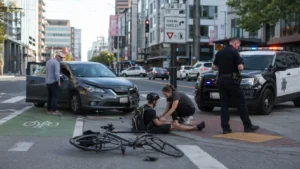
When a battery overheats, a charger malfunctions, or an electrical component fails, the consequences can be serious. A battery-related incident may produce smoke, flames, intense heat, or an explosion-like event. A rider might also lose control after an electrical failure, suffer burns while attempting to disconnect a charging device, or be injured while escaping a fire.
These incidents raise an important question: Can an e-bike battery manufacturer, charger manufacturer, bicycle manufacturer, or another company be held legally responsible when a battery-related crash or fire causes an injury?
The answer is yes, in some circumstances. Under U.S. product liability law, a company may face a claim if a defective product causes harm and the applicable legal requirements are satisfied. Potential problems include defective battery cells, inadequate protective circuitry, incompatible chargers, unsafe product designs, and insufficient warnings.
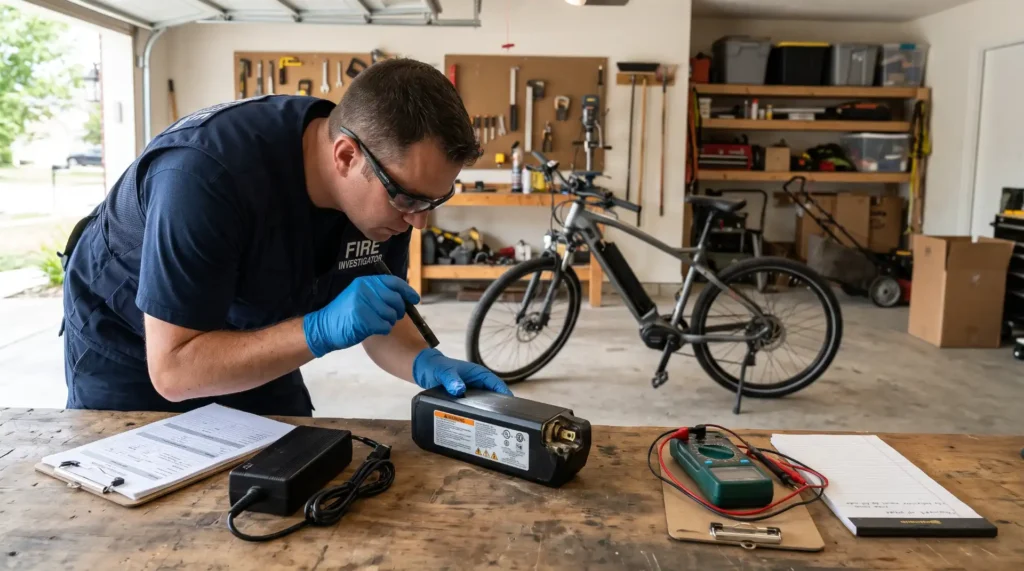
However, not every e-bike fire establishes manufacturer liability. Lithium-ion batteries can be damaged by impacts, improper charging, unauthorized modifications, unsuitable replacement components, or other conditions. Investigators must examine the evidence to determine whether a product defect, misuse, maintenance problem, or combination of factors contributed to the incident.
Safety certification is an important part of this discussion. Standards such as UL 2849 address electrical safety risks in e-bikes, including the interaction between the battery, charger, motor, and other electrical components. Certification can provide meaningful evidence of safety testing, but it does not guarantee that a product can never fail or automatically determine who is legally responsible after an incident.
For injured cyclists and consumers, understanding battery certification, product defects, evidence preservation, and the legal principles governing defective products can help clarify what to do after a serious battery-related incident.
This article explains how e-bike battery fires happen, what certification means, when manufacturers may be liable, and how riders can protect themselves and preserve evidence after a suspected product failure.
Understanding E-Bike Batteries and Charger Safety
An electric bicycle’s electrical system consists of multiple components that must work together safely. The battery stores energy, the charger replenishes it, and the battery management system helps monitor and control important operating conditions.
A defect in one component can sometimes affect the entire system. For example, a charger that supplies inappropriate electrical output may expose a battery to unsafe charging conditions. A battery with defective cells or inadequate protective circuitry may overheat even when the rider follows the manufacturer’s instructions.
How Lithium-Ion Batteries Work
Lithium-ion batteries store energy through electrochemical processes inside individual cells. E-bike battery packs typically contain multiple cells connected and arranged to provide the voltage and capacity required by the bicycle.
These cells are designed to operate within specified electrical and temperature limits. The battery management system, where provided, monitors important parameters and may interrupt charging or discharging when certain conditions become unsafe.
A properly designed battery pack incorporates protections intended to reduce risks associated with overcharging, excessive current, overheating, short circuits, and other abnormal conditions. The precise protections vary by product and design.
Problems can arise when a cell contains a manufacturing defect, electrical connections fail, protective circuitry does not function as intended, or the battery sustains physical damage. In certain circumstances, a cell can enter a condition known as thermal runaway, in which heat-generating reactions become self-sustaining. Heat can spread to neighboring cells, potentially causing a larger fire.
Battery fires can be difficult to manage because the failure may involve multiple cells and substantial heat release. They may also produce hazardous smoke and gases. A person should not attempt to handle a failing battery or investigate its internal components during an active emergency.
Why the Charger Matters as Much as the Battery
A charger is not simply a power adapter that can be substituted whenever the plug fits. E-bike batteries have specific charging requirements, and the charger must be compatible with the particular battery and electrical system.
Voltage, current limits, charging profiles, connectors, and protective features all matter. Two chargers that look similar or use the same connector may not be electrically compatible.
The U.S. Consumer Product Safety Commission (CPSC) specifically warned consumers in September 2024 against using universal chargers with micromobility products unless they have been tested and approved to work safely with the specific device. The agency explained that a charger can fit physically while remaining incompatible electrically. See the CPSC’s warning about universal micromobility chargers.
For riders, the practical rule is straightforward: use the charger supplied with the bicycle or one specifically approved by the manufacturer for that exact battery system. Do not assume that a charger advertised as suitable for a general category of e-bikes is safe for every model.
If the original charger is lost or damaged, contact the manufacturer or an authorized service provider to identify an approved replacement. Avoid improvised adapters and products that make broad compatibility claims without clear documentation.
What Does UL Certification Mean for E-Bike Safety?
Product certification can help consumers distinguish between products that have undergone relevant independent safety evaluations and products whose safety claims are difficult to verify.
Two standards often discussed in e-bike safety are UL 2849 and UL 2271. They address different aspects of electrical system and battery safety.
UL 2849: The Complete E-Bike Electrical System
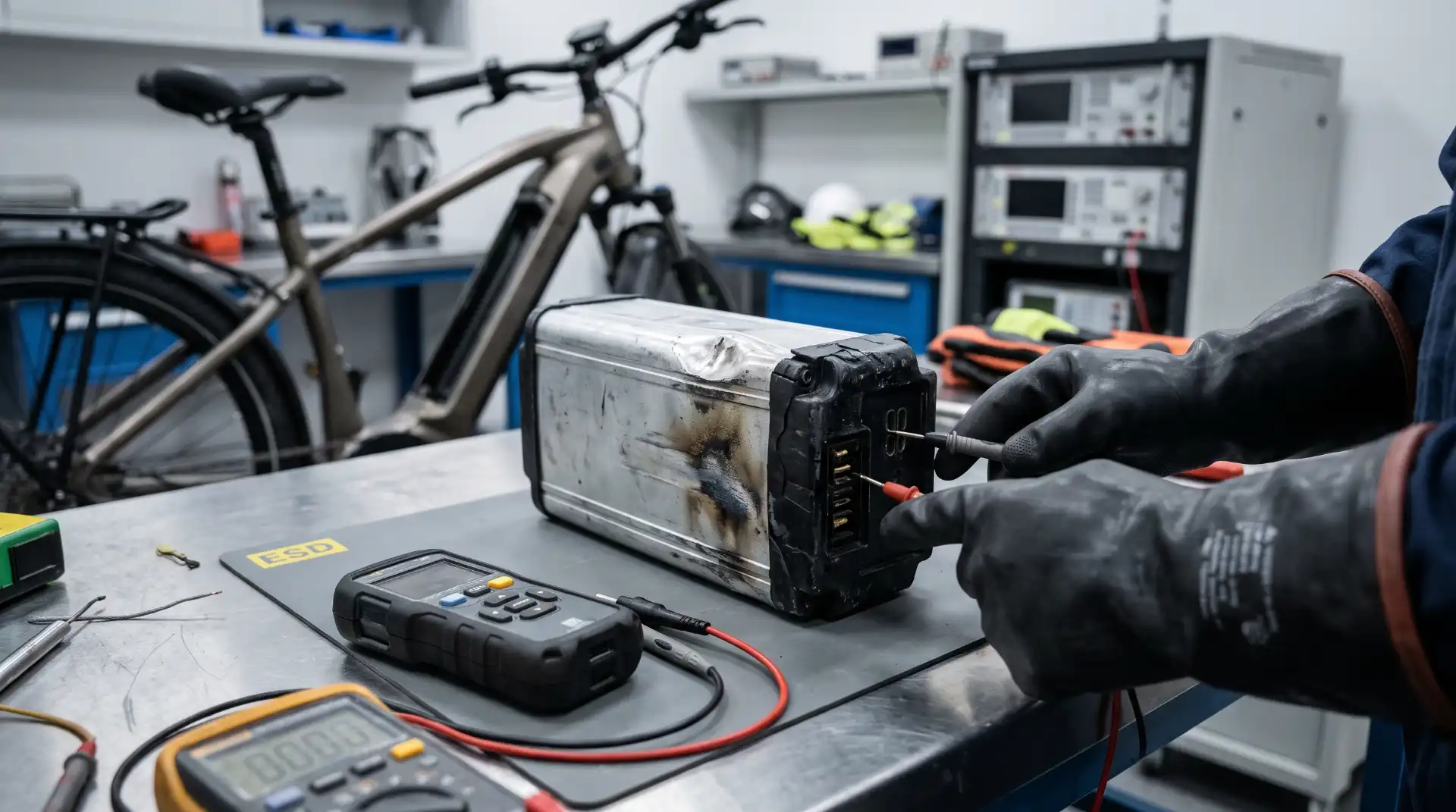
UL 2849 is a safety standard for electrical systems used in e-bikes. It evaluates the electrical drive system, battery system, charger system, and their interaction within the bicycle.
This system-level approach matters because a battery that performs safely in one configuration may not necessarily perform safely with every charger, motor controller, or electrical arrangement.
According to UL Solutions’ explanation of UL 2849 e-bike certification, the standard addresses electrical and fire safety, including risks associated with the electrical system and charging.
For consumers, a complete e-bike system certified to the applicable standard provides a stronger basis for confidence than an unsupported claim that one isolated component has been tested.
However, certification should be verified. A seller’s use of phrases such as “UL tested,” “UL compliant,” or “built to UL standards” is not necessarily the same as independent certification of the complete bicycle electrical system. Consumers should check the certification body’s records and confirm that the actual model is covered.
UL 2271: Batteries for Light Electric Vehicles
UL 2271 addresses batteries used in light electric vehicle applications. It may be relevant when evaluating a battery pack designed for an e-bike or another qualifying light electric vehicle.
Battery-level certification and complete-system certification are not interchangeable. A certified battery does not automatically establish that the bicycle’s wiring, charger, controller, and other components have been evaluated together as a complete system.
Likewise, certification of a complete electrical system should not be interpreted as proof that every conceivable replacement battery or aftermarket charger is safe to use with it.
When purchasing a replacement battery, verify the exact product model, compatibility, and certification claims. A generic battery advertised with the correct voltage or connector may still differ in its protective circuitry, construction, or ability to communicate safely with the bicycle’s electronics.
Does Certification Guarantee That a Battery Cannot Catch Fire?
No. Certification reduces certain risks through testing and evaluation, but it cannot eliminate every possibility of product failure, damage, misuse, or unexpected operating conditions.
A certified product may still contain a defect that escaped detection, develop a fault during its service life, or be damaged after certification. A replacement component may also introduce a risk that was not part of the original certified configuration.
Certification can be relevant evidence when evaluating whether a product was designed and manufactured with appropriate safety measures. It is not, by itself, a final determination of whether a manufacturer was negligent or whether a product was defective under the law.
If a certified e-bike battery catches fire, the appropriate response is to investigate the cause rather than assume either that the manufacturer must be responsible or that certification rules out a defect.
How E-Bike Battery Fires and Related Injuries Happen
Battery-related incidents can begin in different ways. Some occur while a bicycle is charging, others happen during storage, and some develop while the rider is using the bicycle. Understanding the circumstances can help investigators determine whether a component defect or another contributing factor was involved.
Manufacturing Defects Inside Battery Cells
Battery cells can contain defects introduced during production. These may involve contamination, damaged internal separators, faulty connections, or other imperfections that compromise safe operation.
A defect may not be visible from the outside. The battery may appear normal and work for weeks or months before a failure develops.
Consider a commuter who purchases an e-bike from a reputable retailer and charges it according to the instructions. Several months later, the battery begins emitting smoke while charging. The rider disconnects power if it is safe to do so, leaves the area, and calls emergency services. A subsequent investigation discovers evidence of an internal cell failure.
If reliable evidence establishes that a manufacturing defect existed when the product left the manufacturer’s control and caused the incident, the battery manufacturer or another responsible entity may face a product liability claim. The outcome depends on the facts, the applicable legal theory, and state law.
The investigation must still consider other possibilities, including physical damage, incompatible charging equipment, prior repairs, and exposure to unsuitable conditions.
Defective Battery Management Systems
A battery management system helps monitor the battery pack and control conditions such as voltage, current, and temperature. Depending on its design, it may help prevent charging or discharging outside specified operating limits.
If the system contains defective components, faulty software, inadequate safeguards, or an engineering flaw, it may fail to respond appropriately to an unsafe condition.
For example, a battery may continue accepting an unsafe charging current because a protective function does not operate as intended. Alternatively, a temperature-monitoring fault could prevent the system from responding to excessive heat.
Determining whether a battery management system contributed to a fire may require examination by qualified technical experts. Relevant evidence can include circuit boards, firmware, manufacturing records, test results, and the condition of the battery after the incident.
The fact that a battery management system exists does not establish that it was adequately designed or that it functioned correctly in the specific incident.
Incompatible or Defective Chargers
A charger may cause a hazard if it delivers an inappropriate output, contains defective electrical components, lacks necessary protections, or is not compatible with the battery.
In some incidents, a charger may be an aftermarket product purchased separately from the bicycle. In others, the charger may have been supplied with the original bicycle.
These distinctions can matter when investigating responsibility. A charger manufacturer may be responsible for a defect in its own product, while a bicycle or battery manufacturer may face different questions about system compatibility, warnings, or approved replacement components.
A seller that supplies an incompatible charger as part of a product package may also warrant investigation. The relevant facts include what the seller represented, what the manufacturer approved, and whether the component was suitable for the intended use.
Consumers should not assume that a charger is safe because it is new, expensive, or advertised for e-bike use. Compatibility and credible safety certification matter more than appearance or marketing language.
Unsafe Replacement Batteries and Aftermarket Modifications
Replacement batteries can introduce risks when they are not approved for the specific bicycle. Even if the voltage and connector appear correct, differences in cell quality, internal protection, wiring, and charging requirements may affect safety.
Some riders also modify their e-bikes to increase speed, range, or power. Such modifications may alter the electrical load or cause components to operate outside the conditions for which they were designed.
If an unauthorized modification contributes to a fire, it may complicate a claim against the original manufacturer. However, the existence of a modification does not automatically settle every legal question. Investigators may still need to determine whether an independent defect also contributed to the incident and whether the modification was related to the failure.
The CPSC advises consumers to use appropriate replacement battery packs, avoid modified battery systems, and follow manufacturer charging instructions. Its micromobility safety guidance provides additional information about safer charging and battery use.
Physical Damage, Aging, and Improper Storage
Battery packs can be damaged by a crash, impact, crushing, water exposure, unsuitable temperatures, or unauthorized disassembly. A battery that appears intact may have internal damage that is not immediately obvious.
Battery aging can also affect performance. Over time, cells may lose capacity, and damage or deterioration may increase safety concerns. The significance of a battery’s age depends on its design, condition, history, and use.
Storage and charging conditions matter as well. Leaving a battery near heat sources, blocking ventilation, using unsuitable charging equipment, or ignoring the manufacturer’s instructions can increase risks.
These circumstances do not automatically absolve a manufacturer of responsibility. A product may still have been defectively designed or inadequately labeled. But they are important facts in determining why a particular incident occurred.
When Can an E-Bike Battery or Charger Manufacturer Be Held Liable?
In the United States, product liability law generally provides several possible legal theories for claims involving defective products. The precise rules vary by state, and not every claim requires proof of the same elements.
Potentially responsible parties may include a battery manufacturer, charger manufacturer, e-bike manufacturer, importer, distributor, or retailer. Which parties may be liable depends on their roles in producing and supplying the product, the defect alleged, and the applicable law.
1. Manufacturing Defects
A manufacturing defect occurs when a particular product differs from its intended design or applicable manufacturing specifications in a way that makes it unsafe.
For example, a battery pack may contain a defective cell, a poorly secured electrical connection, or an incorrectly installed component that causes overheating.
The product may be defective even if other units of the same model are safe. An investigation may compare the damaged battery with design documents, manufacturing tolerances, quality-control records, and exemplar products.
Evidence that a product departed from its intended specifications can support a manufacturing-defect claim. However, investigators must also establish the required connection between the defect and the injury or property damage.
2. Design Defects
A design defect involves a problem with the product’s design rather than an isolated mistake during manufacturing.
A battery system could, for example, lack adequate protection against a foreseeable electrical fault, provide insufficient separation between components, or fail to manage a foreseeable overheating condition.
Design defect standards differ among states. Some jurisdictions focus on whether a product was unreasonably dangerous under a consumer-expectations test, a risk-utility analysis, or a combination of legal approaches.
A claim may examine whether a safer feasible design was available, whether relevant risks were reasonably foreseeable, and whether the benefits of the existing design justified its risks. The analysis depends on the product, the evidence, and the governing law.
The mere fact that a battery caught fire does not prove a design defect. Expert analysis may be necessary to determine whether the design itself was unsafe and whether a different design could have reduced the risk.
3. Failure to Provide Adequate Warnings
Manufacturers may also face liability when they fail to provide appropriate warnings or instructions about foreseeable risks.
Potential concerns include inadequate instructions about compatible chargers, insufficient warnings against unauthorized battery modifications, or unclear guidance about damaged batteries.
Warnings are particularly important when a risk is not obvious to an ordinary consumer. A rider may not understand that a charger with a physically compatible connector can still be electrically unsuitable.
A failure-to-warn claim typically requires more than showing that an incident occurred. The claimant may need to establish that the warning or instruction was inadequate under applicable law and that the deficiency caused or contributed to the injury.
Warnings do not necessarily excuse a defective design or manufacturing process. Nor does the presence of a warning automatically eliminate liability if the product itself was defective.
4. Defective Chargers and Electrical Components
The charger, wiring harness, motor controller, battery management system, and other electrical components may each be relevant to an investigation.
A charger manufacturer could face a claim if a defect in the charger’s design or construction causes an electrical hazard. A bicycle manufacturer may also warrant investigation if it supplied an incompatible charger or failed to provide appropriate compatibility information.
If multiple components contributed to the incident, several parties may be involved. Their respective responsibility depends on the evidence and state law.
For example, a battery might be manufactured by one company, assembled into an e-bike by another, and imported or sold by separate businesses. An investigation may need to identify the product’s supply chain and determine where the relevant defect originated.
5. Negligence and Other Potential Claims
Depending on the circumstances, a claim may also involve negligence, breach of warranty, or other legal theories.
Negligence generally concerns whether a party failed to exercise the level of care required under the applicable law. A claim might examine inadequate quality control, unsafe assembly, or a failure to address a known hazard.
Warranty claims may concern express promises or implied obligations associated with the product. The availability and requirements of these claims vary by jurisdiction, and warranty terms may affect some aspects of the dispute without necessarily eliminating all statutory or tort remedies.
An attorney can assess which legal theories are potentially available and whether claims should be brought against the manufacturer, seller, importer, or another responsible party.
Who May Be Responsible for an E-Bike Battery Fire?
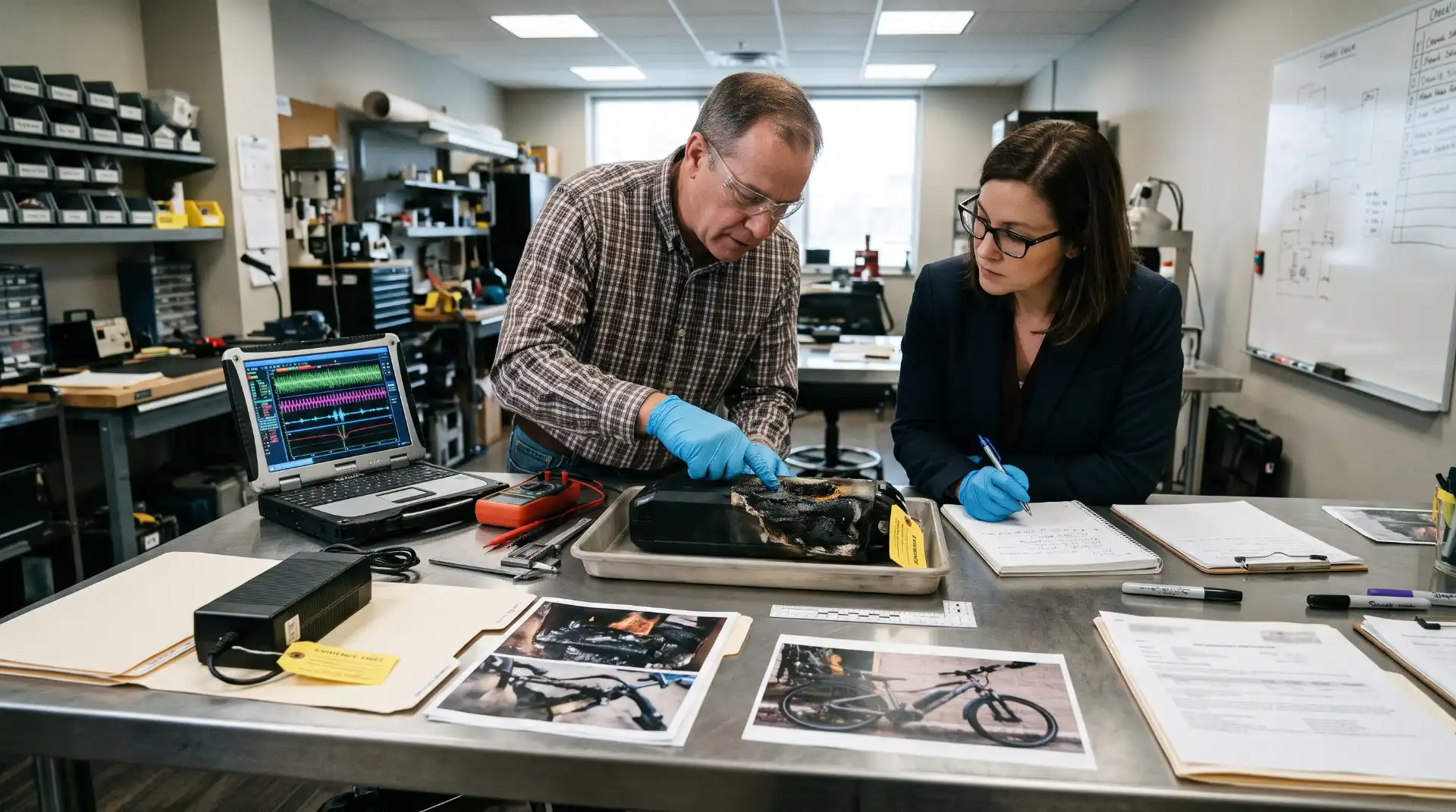
A battery-related fire can involve several companies and multiple possible causes. Identifying the appropriate parties is an important part of evaluating a potential claim.
Determining responsibility can be complicated when an incident involves multiple parties, serious injuries, or disputed evidence. Learn more about how bicycle accidents differ from car accidents and the legal issues involved, including liability, insurance, and the challenges of pursuing a claim.
Battery Manufacturer
The battery manufacturer may be a relevant defendant if a defect in the cells, pack construction, protective circuitry, or other battery components caused the incident.
Investigators may examine the battery’s production history, quality-control procedures, design specifications, safety testing, and any previous complaints involving the same model.
E-Bike Manufacturer
The bicycle manufacturer may warrant investigation if the complete electrical system was defectively designed or assembled, if incompatible components were supplied, or if the product lacked appropriate safety instructions.
A manufacturer that integrates batteries, controllers, chargers, and wiring into a complete product may have responsibilities distinct from those of a component supplier. Whether those responsibilities support a claim depends on the facts and applicable law.
Charger Manufacturer
If the charger itself caused the unsafe condition, its manufacturer may be responsible for a defective product. Relevant questions include whether the charger met its specifications, was suitable for the intended battery, and included appropriate protective features and warnings.
Retailers, Importers, and Distributors
The company that sold the bicycle may not have designed or manufactured it, but it can still be relevant to a product liability investigation. Depending on state law, retailers, importers, distributors, and other participants in the supply chain may face potential liability.
A retailer may also warrant investigation if it supplied a replacement charger or battery that was incompatible with the bicycle or made inaccurate safety representations.
The fact that a company appears in the supply chain does not automatically mean it is legally responsible. The applicable law and evidence determine whether a claim can proceed against that party.
What Happens If a Certified E-Bike Battery Catches Fire?
Certification is an important factor, but a fire involving a certified product still requires a careful investigation.
A certification mark can help establish that a particular product or system was evaluated against specified safety requirements. It does not prove that every individual unit was manufactured without defects, that the product remained undamaged after sale, or that every replacement component was approved.
Certification Is Evidence, Not Automatic Immunity
Suppose a rider purchases an e-bike that is represented as certified to UL 2849. The rider uses the supplied charger according to the instructions, but the battery later catches fire.
The certification may be relevant to the investigation, but the cause remains an open question. Investigators may examine whether a cell failed, whether the charger operated correctly, whether the battery management system functioned as intended, and whether the product complied with its applicable specifications.
A certified product can still be defective. Conversely, a fire does not automatically establish that the product violated a safety standard or that a manufacturer acted negligently.
The outcome depends on the technical findings and the legal requirements governing the claim.
Certification Claims Should Be Verified
Consumers should distinguish between a complete product certification and a statement that an individual component was tested.
They should also be cautious about vague phrases such as “UL-style,” “designed to UL standards,” or “tested for safety.” Such wording does not necessarily establish independent certification of the actual e-bike model.
Before purchasing, consumers can ask the manufacturer for the exact certification details and verify the product through the relevant certification organization’s database. The model number, product configuration, and certification scope matter.
Documentation can become particularly important after an incident if there is a dispute about the product’s specifications or the manufacturer’s safety representations.
What to Do After an E-Bike Battery Fire or Battery-Related Crash
A battery incident can create several immediate hazards, including fire, smoke exposure, electrical dangers, and injuries caused by a fall or collision. Safety should take priority over collecting evidence or determining legal responsibility.
Preserving evidence is important when a product defect may have caused an injury or property damage. For more guidance, read our article on the importance of gathering evidence after a bike accident, which explains how photographs, witness information, and other documentation can help establish what happened.
1. Get Away From the Hazard and Call for Help
If a battery is smoking, hissing, swelling, leaking, unusually hot, or emitting a strong unusual odor, stop using the bicycle and move away from the immediate danger. Warn others to stay clear and call 911 if there is an active fire, a significant smoke hazard, or an emergency involving injuries.
Do not attempt to carry a failing battery through a building or handle it to disconnect the charger if doing so would expose you to danger. Avoid breathing smoke or attempting to extinguish a serious lithium-ion battery fire without appropriate training and equipment.
If the incident occurs during a crash, seek medical attention for burns, smoke exposure, head injuries, or other concerning symptoms. Do not delay emergency care to photograph the bicycle.
2. Preserve the Bicycle, Battery, and Charger
Once the area has been declared safe, preserve the bicycle, battery, charger, and any damaged components if it is safe and lawful to do so.
Do not disassemble, repair, recharge, or dispose of the battery before receiving appropriate guidance. A damaged lithium-ion battery can remain hazardous even after visible flames have stopped.
If fire officials, investigators, or other authorities take custody of the components, ask how the evidence will be documented and whether you can obtain copies of relevant reports.
The original battery and charger may be important evidence. Replacing them immediately or allowing them to be discarded could make it more difficult to determine what happened.
3. Photograph the Scene and Record Product Information
When the scene is safe, photograph the bicycle, charger, battery exterior, charging location, and surrounding damage. Take pictures of labels, model numbers, serial numbers, certification marks, and any visible warning information.
Keep the purchase receipt, warranty information, owner’s manual, charging instructions, and communications with the seller or manufacturer. If the bicycle was purchased online, save the product listing and any claims made about certification or battery compatibility.
Record the date, approximate time, location, and circumstances of the incident. Note whether the bicycle was being ridden, charging, or stored, and whether any replacement components or repairs had been made.
Avoid making assumptions about the cause. A description such as “the battery began smoking while charging” is more useful than an unsupported conclusion that a particular company caused the fire.
4. Identify Witnesses and Relevant Records
Witnesses may be able to describe what happened before the incident, including unusual sounds, smoke, sparks, or the bicycle’s behavior.
If the incident occurred in an apartment building, garage, workplace, or business, relevant security footage may exist. Ask the property owner or manager to preserve footage promptly because some systems automatically overwrite recordings.
Keep any available video from a bicycle camera or nearby surveillance system in its original form. Preserve digital files and avoid publicly posting potentially sensitive material before considering privacy and legal implications.
If a vehicle collision also occurred, police reports, witness statements, photographs of the roadway, and medical records may help establish the sequence of events.
5. Report the Incident to the Appropriate Authorities
Depending on the circumstances, the incident may warrant a fire department report, police report, product safety complaint, or insurance notification.
Consumers can report potentially unsafe products to the U.S. Consumer Product Safety Commission. Reports can help the agency identify recurring hazards and evaluate whether additional action may be appropriate.
A report does not automatically establish that a product is defective or guarantee a recall. Nevertheless, accurate information about the model, purchase date, circumstances, and injuries can contribute to product safety investigations.
If you suspect a product defect caused significant injury or property damage, consider obtaining legal advice before disposing of the product or agreeing to an inspection that could alter important evidence.
6. Notify Your Insurer and Consider Legal Advice
Homeowners, renters, auto, health, or other insurance policies may be relevant depending on the type of loss and the circumstances. Coverage varies, so notify the appropriate insurer and preserve records of the damage and expenses.
If you suffered a significant injury or property loss, a qualified product liability attorney can assess whether the facts support a claim and identify potentially responsible parties.
Do not assume that the retailer’s refund policy or the manufacturer’s warranty determines your entire legal position. A warranty, a product liability claim, and an insurance claim serve different purposes and may involve different rules.
Can You Recover Compensation After an E-Bike Battery Fire?
If a defective battery or charger causes an injury or property damage, compensation may be available under applicable law. However, eligibility and the types of recoverable damages depend on the circumstances, the evidence, and the jurisdiction.
Battery-related incidents can cause burns, fractures, smoke-related injuries, and other medical problems that require prompt evaluation. Our guide to common bicycle accident injuries and treatment options provides additional information about injuries and recovery after a bicycle crash.
Medical Expenses and Other Injury-Related Losses
Depending on the claim, recoverable damages may include reasonable medical expenses, rehabilitation costs, lost income, reduced future earning capacity, and compensation for pain and suffering.
A battery incident may also cause burns, respiratory injuries, fractures, or injuries sustained while escaping a fire or avoiding a malfunctioning bicycle. The relevant question is whether the claimed harm is legally connected to the product defect or other actionable conduct.
Medical records, employment documentation, receipts, and other supporting evidence can help establish the extent of the loss.
Property Damage
A battery fire can damage a bicycle, charger, garage, apartment, vehicle, or other personal property. Depending on the applicable law and circumstances, a claim may include eligible property losses.
Photographs, repair estimates, purchase receipts, and insurance records can help document the damage. If a fire affects rented property or a shared building, the respective responsibilities of tenants, property owners, insurers, and product manufacturers may require separate analysis.
Legal Deadlines and Comparative Responsibility
Product liability claims are subject to state-specific deadlines and legal rules. Some states impose special statutes of repose or other limits that may differ from ordinary personal injury deadlines.
Responsibility may also be disputed if the battery was modified, an incompatible charger was used, or the product was damaged before the incident. These circumstances may affect the outcome differently depending on the jurisdiction and the evidence.
Because deadlines and legal standards vary, anyone considering a claim should seek advice promptly rather than assuming that a particular time limit applies nationwide.
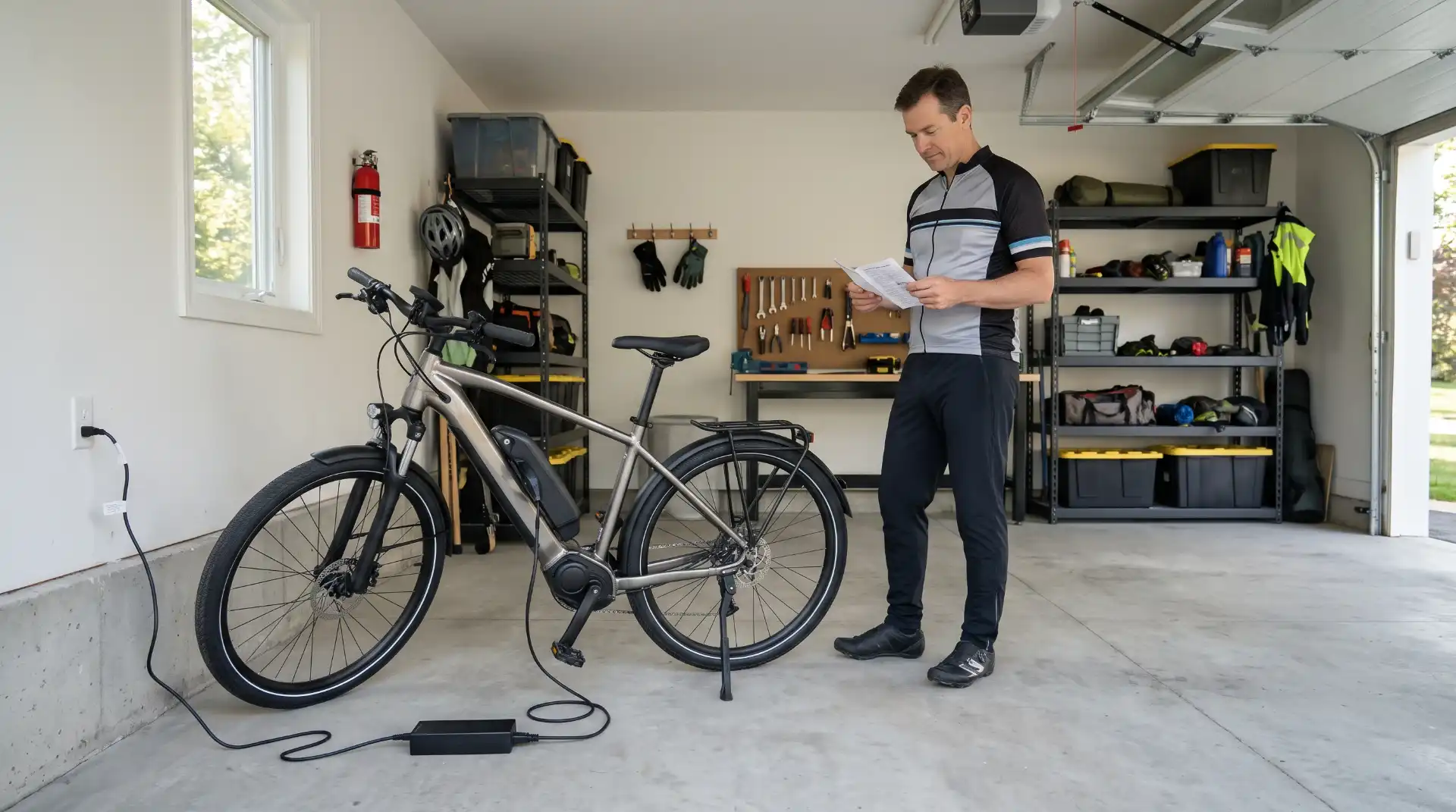
How E-Bike Owners Can Reduce Battery and Charger Risks
Although manufacturers and sellers have responsibilities under applicable law, consumers can also take practical steps to reduce avoidable hazards.
Buy From Reputable Sellers and Verify Certification
Choose a product with clear manufacturer information, reliable documentation, and verifiable safety certification appropriate to the complete electrical system. Avoid products with unclear origins or unsupported safety claims.
Confirm that the battery and charger are approved for the exact model. Keep purchase records and product instructions in a location where they can be found if a safety issue arises.
Follow the Manufacturer’s Charging Instructions
Use the specified charger and follow the instructions for charging, storage, and maintenance. Do not use damaged charging cables, altered adapters, or chargers advertised as universally compatible without confirmation that they are approved for the specific system.
Stay present while charging and avoid charging while asleep or away from home. Keep the charger and battery away from flammable materials, and do not block ventilation.
Inspect the Battery and Respond to Warning Signs
Pay attention to changes in battery shape, unusual heat, leaking, damaged wiring, unexpected noises, or unusual odors. Stop using a battery that appears damaged or behaves abnormally, move away if there are signs of an active failure, and seek appropriate professional guidance.
Do not open a battery pack or attempt repairs unless you are qualified and authorized to do so. Damaged lithium-ion batteries may pose risks even when they are not connected to a charger.
Avoid Unapproved Modifications
Do not bypass protective circuitry, substitute incompatible batteries, or modify the charging system to increase performance. Use authorized service providers when repairs are needed and confirm that replacement components are approved for the bicycle.
These precautions reduce foreseeable risks, but they cannot guarantee that a product will never fail. Manufacturers must still meet their applicable obligations, and suspected defects should be investigated on their own evidence.
Frequently Asked Questions
Does UL certification mean an e-bike battery cannot catch fire?
No. Certification indicates that a product or system has been evaluated against specified safety requirements. It can reduce certain risks but does not eliminate every possibility of a manufacturing defect, damage, misuse, or failure.
Can I sue an e-bike manufacturer if its battery catches fire?
Potentially. A claim may be possible if a defect or other legally actionable conduct caused injury or damage. The evidence must establish the relevant legal requirements, and responsibility may involve the battery manufacturer, charger manufacturer, bicycle manufacturer, seller, or another party.
Is the battery manufacturer always responsible for a battery fire?
No. The cause could involve a defective battery, an incompatible charger, an unsafe design, physical damage, an unauthorized modification, or several contributing factors. Responsibility depends on the technical evidence and applicable law.
Can a charger manufacturer be liable if the charger was sold separately?
Potentially, if a defect in the charger caused the incident and the applicable legal requirements are met. A retailer or other supplier may also warrant investigation, depending on its role and the circumstances.
What evidence should I preserve after an e-bike battery fire?
When it is safe, preserve the bicycle, battery, charger, receipts, manuals, product labels, photographs, witness information, relevant video, and official incident reports. Do not handle or transport a hazardous battery yourself. Follow instructions from emergency responders and qualified investigators.
Where can I report a dangerous e-bike battery?
You can submit a product safety report to the U.S. Consumer Product Safety Commission through its official website. For an active fire or immediate danger, call 911 first. Local fire departments and other authorities may also document the incident.
Conclusion: Certification Matters, but Accountability Still Depends on Evidence
E-bike batteries and chargers are essential to the convenience of electric cycling, but they must be designed, manufactured, and used with appropriate safety protections. When a battery-related fire or crash causes serious harm, the consequences can extend well beyond the bicycle itself.
UL certification can help consumers evaluate electrical safety, and compatible charging equipment can reduce avoidable risks. Nevertheless, certification does not eliminate every possible defect or determine legal responsibility after an incident.
A manufacturer may be liable when evidence establishes that a defective product, inadequate warning, or other actionable failure caused injury or property damage under the law that applies. Depending on the circumstances, the investigation may involve the battery, charger, complete bicycle system, replacement components, and the companies responsible for supplying them.
Consumers can protect themselves by buying products with verifiable safety credentials, using approved chargers, avoiding unauthorized modifications, and following the manufacturer’s instructions. After an incident, immediate safety and medical care should come first, followed by appropriate reporting and careful preservation of evidence.
Ultimately, the key to an e-bike battery liability claim is not simply whether a fire occurred or whether the product carried a certification mark. It is whether reliable evidence establishes what failed, why it failed, and who may be legally responsible.