The Story Behind a White Bicycle
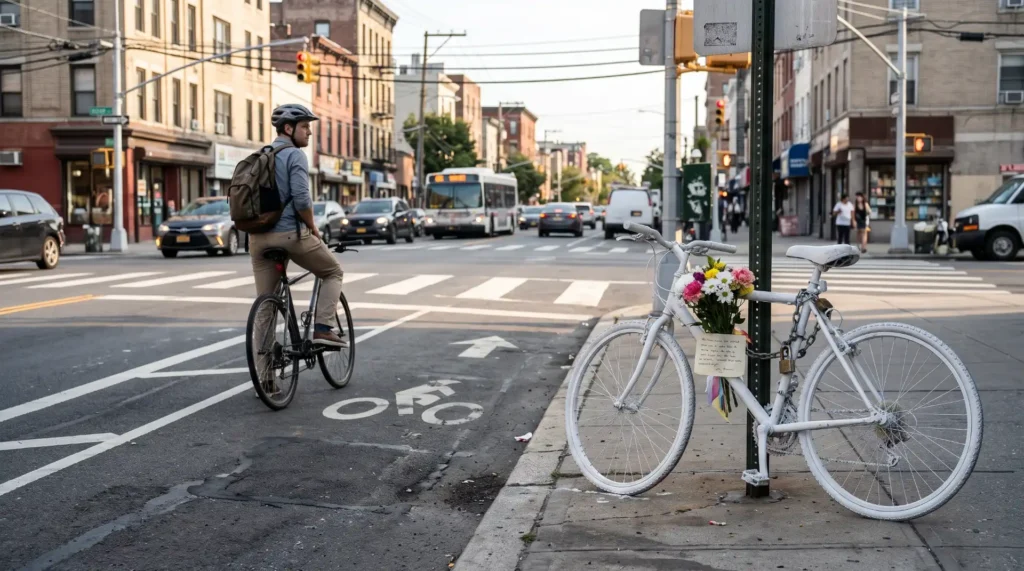
A white bicycle attached to a street sign, fence, or traffic pole can be an unusual sight for drivers and pedestrians. Its tires may be painted white, its frame may be covered in white paint, and flowers, ribbons, or handwritten messages may surround it. Known as a ghost bike, this bicycle serves as a public memorial for a cyclist who died in a crash, often near the location where the collision occurred.
Ghost bikes are more than memorials. They can also draw attention to dangerous intersections, roads without adequate cycling infrastructure, and the human consequences of traffic crashes. For families who have lost loved ones, they offer a visible way to remember a person whose life was connected to cycling. For other road users, they can serve as a reminder that a bicycle crash is not simply a traffic incident recorded in a report. It can permanently change the lives of families and communities.
However, there is another important part of bicycle safety that receives less public attention: the crashes that never appear in official records.
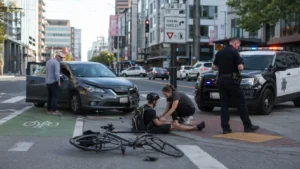
Not every cyclist who falls, collides with a vehicle, or is forced off the road contacts law enforcement. Some riders suffer injuries that initially appear minor. Others crash while avoiding a dangerous driver and never make contact with the vehicle. Some collisions occur in parking lots, driveways, or locations where police do not respond. Many cyclists seek medical treatment without realizing that their injuries may be relevant to local traffic safety data.
When these incidents go unreported, the resulting statistics can provide an incomplete picture of the risks cyclists face. A road may appear relatively safe in a municipal database even though riders regularly experience dangerous passing maneuvers, near misses, falls caused by road defects, or collisions that never reach the authorities.
For communities across the United States, understanding the relationship between ghost bikes and unreported bicycle crashes is an important step toward safer roads. Memorials make individual tragedies visible, while accurate crash data helps communities identify patterns, evaluate risks, and decide where improvements are needed.
This article explains how ghost bikes raise awareness, why bicycle crashes are underreported, how missing information can affect safety decisions, and what cyclists, families, local governments, and transportation agencies can do to improve the information used to prevent future crashes.
What Is a Ghost Bike?
A ghost bike is a bicycle painted white and placed at or near a location associated with a cyclist’s death or, in some cases, another serious cycling incident. These memorials are commonly installed by friends, family members, cycling advocates, or community organizations.
The bicycle is intended to be a visible reminder of a person who lost their life while riding. It may also encourage drivers to pay closer attention to cyclists, prompt local officials to examine a dangerous road, or support public discussion about traffic safety.
Ghost bikes are found in cities and communities throughout the United States. Their appearance and placement vary according to local customs, available space, property ownership, and community preferences. Some remain at a location for years, while others are removed because of construction, municipal policies, or weather damage.
Why Are Ghost Bikes Painted White?
White paint makes the bicycle stand out from the surrounding environment and gives the memorial a recognizable appearance. The color can represent remembrance, loss, and a call for safer streets.
The bicycle itself is especially meaningful because it represents the transportation method used by the person who died. Unlike a conventional roadside sign, a ghost bike connects the memorial directly to the activity involved in the crash.
A white bicycle beside a busy intersection can prompt people to reconsider how drivers, cyclists, and pedestrians share public space. It may lead residents to ask whether a protected bike lane was needed, whether drivers had adequate visibility, whether traffic speeds were appropriate, or whether the intersection’s design created avoidable conflicts.
These questions do not establish fault in an individual collision. That determination depends on the available evidence and applicable law. Nevertheless, a memorial can encourage a community to investigate whether a location presents broader safety concerns.
Ghost Bikes as Public Safety Reminders
A ghost bike can communicate something that a spreadsheet or traffic report cannot easily convey: the consequences of a serious crash for a real person and the people who cared about them.
A memorial may draw attention to a roadway that residents previously considered ordinary. Drivers who pass the location might become more aware of cyclists approaching an intersection or traveling alongside parked vehicles. Local officials may receive questions about traffic signals, speed limits, road markings, or bicycle infrastructure.
However, a ghost bike should not be treated as a complete record of local bicycle crashes. It usually represents a specific person or event rather than every incident in the area. Many fatal crashes do not result in a permanent memorial, and many dangerous locations have no ghost bikes at all.
Ghost bikes are therefore best understood as one form of public awareness, not a substitute for official crash reports, medical information, engineering investigations, or community safety data.

Why Accurate Bicycle Crash Data Matters
Transportation agencies use crash information to understand where collisions occur, which road users are affected, and what circumstances may contribute to injuries and fatalities. These records help governments prioritize safety projects and evaluate whether improvements are working.
For cyclists, the quality of this information can influence whether dangerous intersections receive attention, whether a road is considered for a protected bike lane, and whether transportation officials recognize a recurring problem involving turning vehicles, poor lighting, or road surface defects.
The Federal Highway Administration explains that crash databases have limitations, including incomplete reporting and differences in how incidents are documented. Its road safety guidance also discusses the importance of medical and emergency response information when evaluating traffic injuries. See the official FHWA guidance on measuring road safety.
Crash Statistics Influence Infrastructure Spending
Local governments have limited transportation budgets. They must decide which intersections need redesigns, where to install lighting, which roads require resurfacing, and where protected cycling facilities could reduce risk.
Crash data can help officials identify locations with repeated incidents or serious injury patterns. When several reported crashes occur at the same intersection, the information may justify a detailed safety review.
But if cyclists regularly crash without filing reports, a location can appear safer than it really is. A city might see only two recorded collisions while riders have experienced many additional falls and near misses.
That incomplete picture can affect funding decisions. A location with more complete reporting may receive attention before a location where crashes are routinely overlooked.
This does not mean every unreported incident would automatically justify a construction project. Instead, it means officials need to consider additional evidence, including traffic speed, road geometry, cycling volume, near misses, and input from people who use the route.
Data Helps Identify Patterns Rather Than Isolated Events
One crash can result from circumstances unique to that incident. Repeated crashes or near misses may reveal a broader problem.
For example, cyclists might report that drivers regularly turn across a bike lane at a particular intersection. One rider may be struck, another may brake sharply to avoid a collision, and a third may fall while swerving away from a turning vehicle.
If only the first incident enters an official database, the recurring conflict can remain hidden.
When reports are collected consistently, transportation planners can investigate whether the problem involves signal timing, restricted visibility, confusing lane markings, vehicle speeds, or the placement of bicycle facilities.
Accurate data is valuable because it helps communities move from reacting to individual injuries toward identifying and reducing the conditions that repeatedly create danger.
Crash Data Helps Evaluate Safety Improvements
Suppose a city installs a protected bike lane, changes an intersection’s signal timing, or reduces vehicle speeds on a cycling corridor. Officials may compare crash information from before and after the improvement.
If the data is incomplete or collected inconsistently, however, the comparison may be misleading. A reduction in reported crashes could reflect fewer incidents, but it might also result from changes in reporting practices or cycling activity.
A meaningful evaluation should consider the amount of cycling, the severity of injuries, the type of crashes, the period studied, and changes in traffic conditions. Where possible, agencies should also review near-miss information and conduct observations at the location.
The goal is not simply to produce lower numbers. It is to determine whether the road has become safer for the people using it.
How Bicycle Crashes Go Unreported in the United States
Bicycle crash underreporting happens for several reasons. Some incidents are minor, some involve no motor vehicle, and others leave the injured cyclist uncertain about what to do next. The reporting process also varies by state and locality.
The National Highway Traffic Safety Administration recognizes underreporting as a limitation of bicycle crash statistics. Its official bicycle safety data and surveillance guidance explains why police reports alone do not capture every cycling injury.
1. Cyclists Assume the Injury Is Too Minor to Report
A cyclist who falls after hitting a pothole may suffer scrapes, bruising, or a sore wrist. The rider might stand up, check the bicycle, and continue home without contacting police or seeking medical care.
Later, the rider may discover a fracture, concussion, or other injury that requires treatment. By then, there may be little documentation of the incident beyond personal recollections and photographs.
Other cyclists may decide that reporting a minor collision is not worth the time involved. They might exchange information with a driver, repair a damaged bicycle, and move on.
Although not every minor fall requires a police report, consistently overlooking incidents can make it harder for communities to understand the full range of cycling hazards. Repeated falls caused by the same road defect, for example, may indicate a maintenance problem that deserves attention even if no individual incident produces a serious injury.
2. The Cyclist Is Forced Off the Road Without Direct Contact
Not every bicycle crash involves a physical collision between a bicycle and a motor vehicle.
Imagine a driver passing a cyclist too closely on a narrow road. The cyclist swerves toward the curb to avoid being struck, loses control, and falls. The vehicle continues without stopping.
The rider may suffer an injury, but there may be no direct vehicle-to-bicycle impact. If the cyclist cannot identify the driver and does not contact law enforcement, the event may never become part of the official crash record.
These incidents can be difficult to classify and investigate. Witness accounts, nearby surveillance footage, bicycle camera recordings, and physical evidence may help establish what happened, but such evidence is not always available.
The distinction matters because a database that captures only easily documented vehicle collisions may miss dangerous situations in which a driver’s actions contributed to a cyclist’s fall.
3. Cyclists Fear Blame or Legal Complications
Some riders hesitate to report a collision because they worry that authorities, insurers, or other parties will blame them.
This concern can be especially strong when a crash occurs at an intersection, on a road without a bicycle lane, or in an area where cyclists and motorists disagree about right-of-way.
A cyclist may also be unsure whether they were required to use a particular lane, whether a traffic signal applied to their movement, or whether a road defect contributed to the fall. Rather than risk an argument, the rider may leave without documenting the incident.
In reality, the legal significance of a crash depends on the circumstances and applicable state law. A cyclist’s possible mistake does not automatically eliminate every legal option, just as a driver’s presence at a crash does not automatically establish liability.
Accurate reporting helps preserve an objective record. It can document the location, roadway conditions, statements, and other evidence while memories are fresh.
4. The Driver Leaves the Scene
Hit-and-run crashes create particular problems for bicycle safety records.
A driver might strike a cyclist, stop briefly, and leave without providing identifying information. In other cases, a cyclist may be forced off the road by a vehicle that never stops.
An injured rider may be focused on getting medical assistance rather than recording a license plate. Witnesses may not know what happened, and nearby cameras may not cover the relevant stretch of road.
Without a vehicle description, witness information, or other evidence, investigators may struggle to establish the circumstances of the incident.
Some of these crashes are reported and investigated, but others may never reach law enforcement. When the vehicle remains unidentified, important details about the collision can be missing even when the cyclist obtains medical treatment.
Cyclists should not place themselves in danger trying to pursue a fleeing driver. Their priority should be getting to a safe location and contacting emergency services when necessary.
5. A Crash Happens on a Trail, Driveway, or Parking Lot
Cycling incidents do not happen only on public roads.
A rider may collide with a vehicle in a shopping center parking lot, strike a bollard on a shared-use trail, or fall on a driveway with poor visibility. Some crashes occur on private property, where reporting procedures and the availability of official data may differ from those for public-road collisions.
These incidents can still cause serious injuries and reveal important safety concerns. A poorly designed parking lot entrance, for example, may create repeated conflicts between motorists and cyclists. A shared-use path may have a visibility problem at a crossing.
When agencies primarily analyze roadway police reports, they may overlook these settings. The resulting safety assessment may not reflect the full range of places where cyclists are being injured.
6. Reporting Requirements Differ Across Jurisdictions
The United States does not have one uniform reporting procedure that applies identically to every bicycle crash in every state.
State laws and local procedures can differ regarding when a crash must be reported, which agency receives the report, what injury or property-damage thresholds apply, and how information is transferred into a state database.
The severity of a crash can also affect the detail collected. A fatal collision may prompt a substantial investigation, while a minor property-damage incident may generate a much more limited record.
These differences make comparisons difficult. Two communities might experience similar cycling risks but report incidents at different rates because of differences in local procedures, public awareness, or access to reporting systems.
For this reason, researchers should be cautious about interpreting differences in raw crash totals as direct evidence that one community is safer than another.
What Missing Crash Data Means for Cyclist Safety
Underreporting is not merely a statistical problem. It can affect how communities understand risk, how public money is spent, and how quickly hazardous conditions receive attention.
Dangerous Intersections May Remain Unchanged
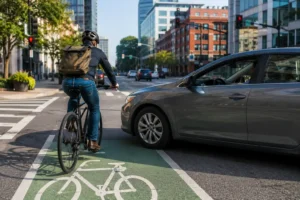
Intersections can present several hazards at once. Drivers may turn across a bicycle lane, parked vehicles may obstruct sight lines, and signal timing may create conflicts between cyclists and turning traffic.
If official records show few crashes, transportation officials may not immediately recognize that an intersection requires investigation. Riders who experience repeated near misses may continue to use the same location without knowing whether a safety review is planned.
A community reporting system can help bring these concerns to the attention of the appropriate agency. Reports should include specific locations, dates, times, movements, and descriptions of the hazard when possible.
A useful safety assessment should consider more than the number of recorded collisions. It should also examine traffic patterns, road design, cyclist exposure, and observations of conflicts.
Road Defects May Be Overlooked
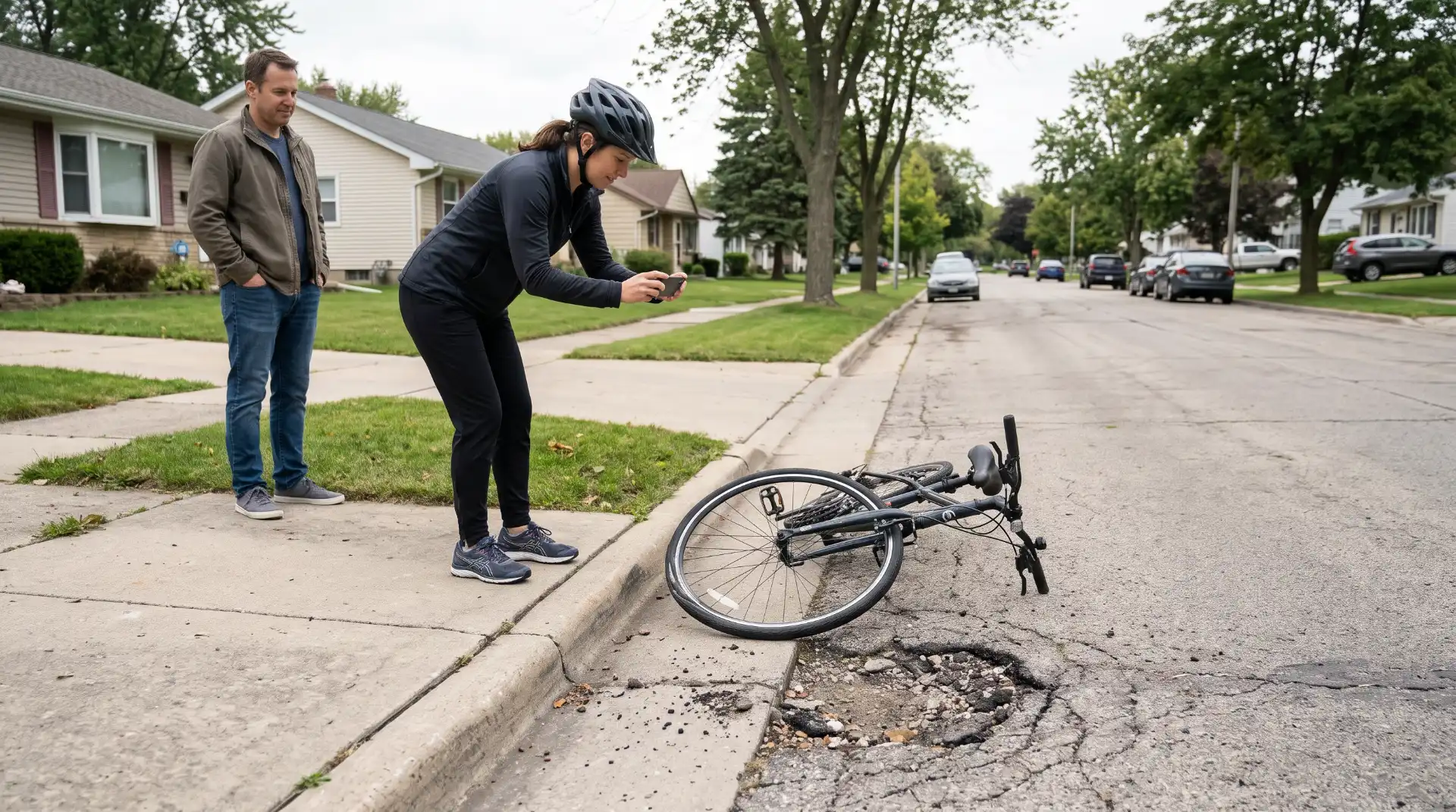
Potholes, broken pavement, loose gravel, damaged drainage covers, and uneven road edges can cause cyclists to lose control.
A motorist may drive over a small pavement defect without noticing it. A cyclist traveling on narrow tires may have a very different experience, particularly when the defect appears suddenly or cannot be avoided safely.
If several riders fall at the same location but do not report the incidents, a public works department may not recognize the problem until someone submits a maintenance complaint or a more serious crash occurs.
Documenting these incidents can help officials understand the consequences of a road defect. Depending on the circumstances, the appropriate response might involve repairs, temporary warnings, improved drainage, or a broader review of the roadway.
Reporting a hazard does not guarantee that a government agency is legally responsible for a resulting injury. Government liability rules, notice requirements, immunities, and filing deadlines vary by jurisdiction.
Vulnerable Cyclists Can Disappear From the Data
Different groups use bicycles in different environments. Children may ride near schools and parks, commuters may travel through busy intersections, and delivery workers may spend long hours on congested streets.
People who rely on bicycles for transportation may also have limited flexibility to avoid hazardous roads. Their routes can be shaped by work schedules, housing locations, transit connections, and the availability of safe alternatives.
If some riders are less likely to report crashes or obtain medical care, their experiences may be underrepresented in the available data. This can make it harder to identify where safety improvements would benefit the people most exposed to danger.
Transportation agencies should consider the characteristics of the communities they serve and seek input from a broad range of cyclists, not just organized cycling groups or people who regularly attend public meetings.
Near Misses Can Reveal Risk Before a Serious Crash
A near miss occurs when a potentially dangerous interaction does not result in a collision or injury. A driver may brake suddenly to avoid a cyclist, or a cyclist may swerve to escape a vehicle turning across their path.
Near misses are not equivalent to confirmed crashes, and they should be recorded separately. Nevertheless, recurring reports can reveal dangerous patterns that injury records alone may fail to show.
For example, multiple cyclists might describe vehicles passing too closely on a road with no shoulder. The absence of recorded injuries does not necessarily mean the road presents no risk. It may mean riders have been avoiding collisions through sudden maneuvers, or that incidents have not been reported.
The Federal Highway Administration discusses the use of observable conflicts and other safety indicators when crash data alone do not adequately identify risks. Reviewing near misses alongside crash records can help agencies recognize problems before additional injuries occur.
Ghost Bikes and the Difference Between Memorials and Official Records
Ghost bikes can draw attention to a fatal collision, but they do not provide the same information as an official investigation.
A memorial may identify the general location of a death and communicate the community’s grief. It usually does not explain the complete sequence of events, the speed of the vehicles involved, the condition of the road, the movements of the cyclist, or the conclusions of investigators.
These details may be available in police reports, medical records, traffic investigations, or court proceedings, depending on the case and applicable access rules.
Why One Memorial Cannot Represent Every Crash
Fatal crashes are only one part of the bicycle safety problem. Thousands of other incidents may result in injuries, bicycle damage, or dangerous near misses without producing a memorial.
A road without a ghost bike should not automatically be considered safe. Likewise, the presence of a ghost bike does not by itself establish that the location is inherently unsafe or that a particular person was legally at fault.
A memorial can serve as a starting point for questions rather than a final conclusion. Residents can ask whether the crash was investigated, whether the road has changed, whether similar incidents have occurred, and whether transportation officials have reviewed the location.
The most useful approach combines respect for the person being remembered with careful analysis of the available evidence.
Preserving the Human Story Without Misrepresenting the Facts
Communities should approach ghost bikes with sensitivity. Families may choose to establish a memorial for personal reasons, and their wishes should be considered when others discuss or photograph it.
It is also important to distinguish confirmed facts from speculation. A memorial does not necessarily provide evidence about a driver’s conduct, a cyclist’s behavior, or the cause of a collision.
Public discussions should avoid presenting an unverified account as an established conclusion. Where possible, information about the incident should be drawn from reliable reporting, official statements, or publicly available records.
This approach protects the dignity of the person who died while keeping attention focused on practical ways to improve safety.
How Better Bicycle Crash Reporting Can Improve Road Safety
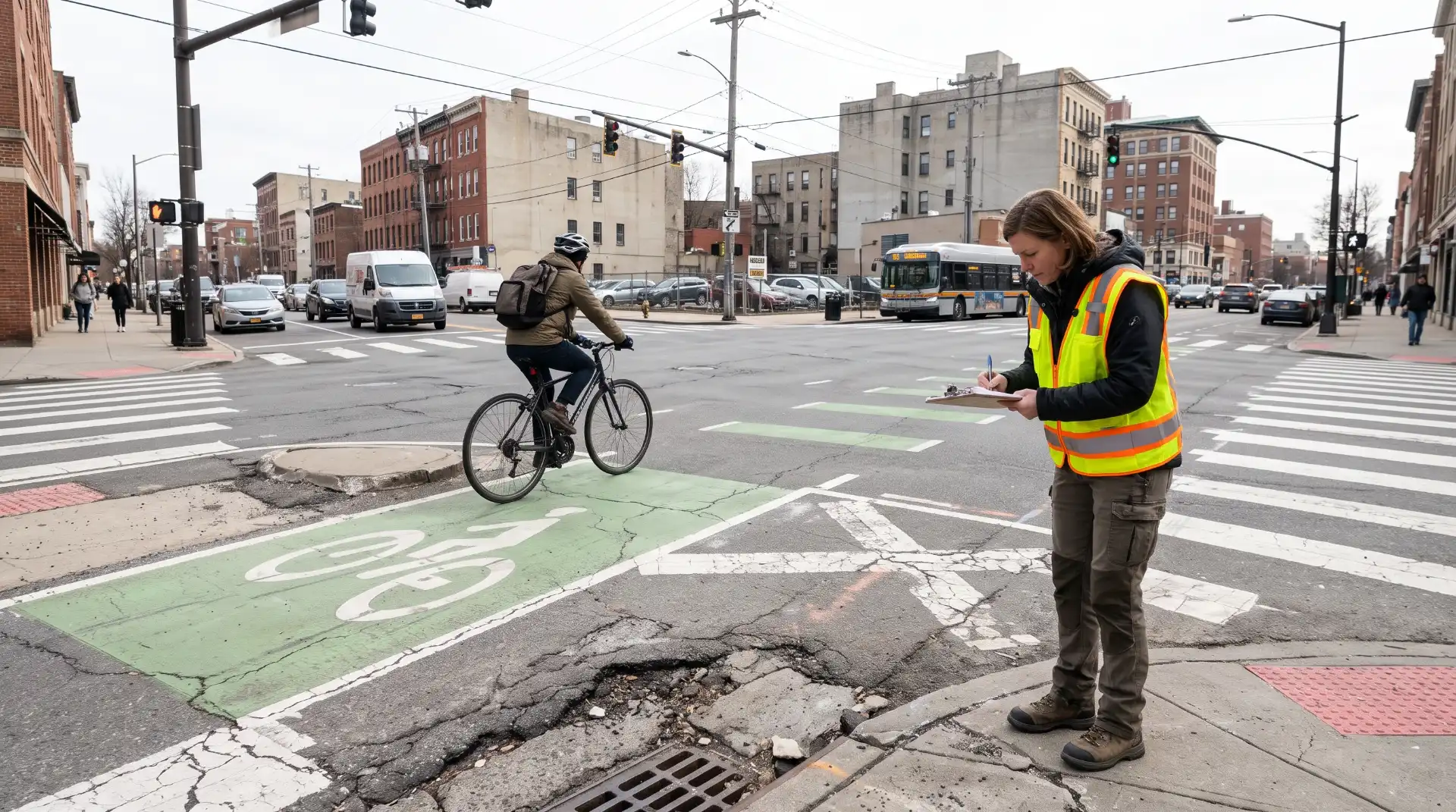
Improving bicycle crash data requires more than asking injured riders to contact police. It involves creating clear reporting procedures, connecting different sources of information, protecting personal privacy, and ensuring that the information collected leads to meaningful action.
Make Reporting Easier for Cyclists
A complicated reporting process can discourage people from documenting incidents, especially when they are injured, shaken, or unsure which agency to contact.
Local governments can help by providing clear online instructions explaining how to report a bicycle crash, a dangerous road condition, or a near miss. Instructions should identify the appropriate police department, transportation agency, or public works department and explain when emergency assistance is necessary.
Online forms should allow users to identify the location of an incident, describe what happened, provide the date and approximate time, and attach photographs when appropriate. They should also distinguish between a completed crash, an injury without a collision, a near miss, and a roadway hazard.
A report submitted through a municipal maintenance portal may be useful for documenting a pothole, but it is not necessarily a substitute for a police report or a formal insurance claim. Clear instructions should explain these differences.
Communities should also avoid assuming that every cyclist has reliable internet access or the ability to complete a detailed online form. Telephone reporting and other accessible options can help reach people who might otherwise be excluded.
Combine Police Reports With Medical and Emergency Data
Police reports are valuable because they may document the scene, statements, road conditions, vehicle movements, and other circumstances surrounding a collision. However, they cannot capture every incident.
Medical records and emergency medical services information can help reveal injuries that never appear in police databases. Hospital information may also help researchers understand injury severity and treatment needs.
The FHWA’s guidance on measuring road safety explains that medical and injury surveillance systems can help identify traffic-related injuries missing from conventional police records.
Combining these sources requires appropriate data governance. Agencies must address privacy laws, access restrictions, differences in data definitions, and the risk of counting the same incident more than once.
For example, one cyclist might generate an emergency call, a hospital visit, an insurance claim, and a police report. Those records should not automatically be treated as four separate crashes. Secure record-linkage methods can help researchers determine whether multiple records describe the same event.
Even when individual records cannot be linked, aggregated information may help identify broad patterns in injury severity, location, and timing.
Develop Community-Based Reporting Systems
Cycling organizations and municipal governments can establish voluntary systems for documenting dangerous conditions and near misses.
A community reporting form might ask riders to describe the location, direction of travel, type of conflict, road conditions, and whether an injury occurred. Reports could then be reviewed to identify recurring issues.
Consider a neighborhood where cyclists repeatedly report close passes along a narrow arterial road. The reports may not prove that a traffic law was violated in every instance, but they can provide a reason for the transportation agency to observe traffic, assess vehicle speeds, and evaluate whether the road design offers adequate space for cyclists.
Community reporting should complement official crash data rather than replace it. Reports may contain incomplete details, subjective assessments, or duplicate submissions. Agencies should explain how the information is verified and how it will be used.
A well-designed system can nevertheless help make previously invisible safety concerns easier to identify.
Use Technology Carefully
Cyclists increasingly have access to cameras, GPS-enabled devices, smartphone applications, and bicycle computers. These tools can help document the location and circumstances of an incident.
A bicycle camera may capture a close pass or the sequence of events before a fall. GPS data may help establish a route, while photographs can show pavement damage, obstructed sight lines, or the condition of a bicycle after a crash.
Technology has limitations. A video may not capture the full scene, a GPS record may be imprecise, and a photograph cannot necessarily establish who was legally responsible. Electronic timestamps and location data may also require verification.
Cyclists should preserve original files when possible, avoid editing evidence they may need later, and maintain backups in a secure location. They should not place themselves in danger to collect footage or attempt to record a moving vehicle at the expense of controlling the bicycle.
Privacy deserves equal attention. Videos may capture pedestrians, license plates, homes, or other identifying information. Publicly posting this material can create risks for people who were not involved in the incident.
For safety planning, aggregated and appropriately anonymized data may often provide useful insights without exposing individual identities.
Measure Near Misses Separately From Crashes
Near-miss reports can help officials identify locations where road users repeatedly encounter conflicts, but they should not be combined indiscriminately with injury crashes.
A crash count measures recorded collision events. A near-miss count reflects reported dangerous interactions, which can be influenced by how many people use the reporting system and how they interpret a near miss.
A useful transportation dashboard should distinguish among fatal crashes, injury crashes, property-damage incidents, falls without vehicle contact, and reported near misses. Agencies should explain how each category is defined and whether the information has been independently verified.
This separation makes it easier to compare like with like. It also allows officials to use near-miss information as an early warning indicator rather than treating it as proof that a particular crash has occurred.
What Cyclists Should Do After a Crash
Cyclists can contribute to more accurate safety records while also protecting their health and potential legal rights. The appropriate response depends on the severity of the incident, the location, and the applicable reporting rules.
Put Immediate Safety and Medical Needs First
After a crash, move away from immediate traffic danger if it is safe to do so. Call 911 in the United States when there is a serious injury, a dangerous roadway obstruction, or another emergency requiring immediate assistance.
Seek prompt medical evaluation when you experience a head impact, loss of consciousness, severe pain, confusion, weakness, or other concerning symptoms. Some injuries are not immediately apparent, and delaying assessment can create health risks.
Do not assume that an incident is unimportant because the bicycle still works or you can stand up. Medical needs should take priority over photographing the scene or completing a report.
If you suspect a head, neck, or spinal injury, avoid unnecessary movement while waiting for emergency responders unless remaining in place presents an immediate danger.
Document the Scene When It Is Safe
If you are physically able and it is safe to do so, collect information that may help establish what happened.
Useful details may include the exact location, date, approximate time, direction of travel, weather, lighting, road surface, traffic controls, and visible damage. Photographs can document the bicycle, vehicle damage, road defects, debris, skid marks, or other relevant conditions before they change.
If a motorist or another party is involved, exchange the information required by applicable law. Obtain witness names and contact details when possible, and ask whether nearby businesses or homes may have relevant camera footage.
Do not confront an aggressive driver, obstruct traffic, or pursue a vehicle that leaves the scene. Report the incident to the appropriate authorities and provide the information you have.
Determine Whether a Formal Report Is Required
Reporting requirements depend on state and local law, the severity of the incident, whether a motor vehicle was involved, and other circumstances.
Some jurisdictions require reporting for certain injury crashes or crashes involving specified levels of property damage. Other rules may apply to crashes on private property or to incidents involving only cyclists.
When uncertain, contact the relevant police department or state transportation agency and ask which procedure applies. If the crash involves a motor vehicle, do not assume that an informal exchange of information satisfies every legal obligation.
Keep a copy of any report or incident number provided to you. If you later discover that an injury is more serious than originally believed, ask the relevant agency how to supplement the existing record.
Keep Medical, Repair, and Insurance Records
Accurate documentation can help cyclists track recovery and explain the consequences of a collision.
Keep copies of medical bills, discharge instructions, repair estimates, replacement receipts, and correspondence with insurance companies. Write down your recollection of the crash while the details remain fresh, separating what you personally observed from what another person told you.
If you miss work or need help with ordinary activities during recovery, maintain records of those effects as well. The relevance of particular expenses or losses depends on the circumstances and applicable law.
A crash report can be useful evidence, but it does not automatically establish fault or guarantee compensation. Similarly, the absence of a police report does not necessarily mean that an injury claim is impossible. Other evidence may be available, although missing documentation can make a claim more difficult to investigate.
Because legal deadlines and reporting requirements vary, anyone with a potentially significant claim should consider obtaining advice from a qualified attorney in the relevant state.
How Communities Can Turn Better Data Into Safer Streets
Collecting information is only the beginning. The real value of bicycle crash data comes when communities use it to reduce hazards, improve transportation design, and measure whether safety initiatives are working.
Identify High-Risk Locations
Transportation agencies should examine clusters of crashes alongside road design, traffic speed, visibility, and cycling activity. A location with a modest number of reported collisions may still deserve attention if the incidents are severe or if the roadway creates recurring conflicts.
For example, an intersection might have several reported bicycle crashes involving vehicles turning across cyclists’ paths. A review could examine signal phases, sight lines, turning speeds, lane markings, and the position of the bicycle facility.
BikeAccidents.net discusses one specific example in its article on right-hook bicycle accidents at intersections. Understanding how these crashes occur can help readers recognize why the circumstances and location of each collision should be documented carefully.
The same principle applies to roads where cyclists travel against traffic, encounter unexpected lane changes, or have limited room to maneuver. Detailed information about the crash type can help engineers identify potential countermeasures rather than relying on a total crash count alone.
Improve Infrastructure Based on Evidence
Once a location has been identified for further study, officials can consider improvements suited to the problem. Depending on local conditions, these might include protected bike lanes, better lighting, redesigned intersections, clearer pavement markings, improved signal timing, reduced vehicle speeds, or repairs to damaged pavement.
No single solution is appropriate for every location. A protected bike lane may address one type of conflict but require additional intersection treatments to prevent turning collisions. Improved lighting may help visibility but will not correct an unsafe road layout.
The effectiveness of a project should be evaluated after implementation. Agencies can compare crash severity and frequency, cycling volumes, near-miss observations, and other relevant indicators before and after the change.
Accurate reporting supports this process by helping officials understand both the initial problem and the outcomes of their response.
Connect Crash Patterns With Roadway Design
Sometimes the most useful information is not simply where a crash happened, but how it happened.
A collision near an intersection may involve a driver turning across a cyclist’s path. A crash on a rural road may involve a narrow shoulder or a vehicle passing too closely. A fall on a city street may result from a drainage grate, broken pavement, or a sudden evasive maneuver.
These distinctions matter because different crash patterns may require different interventions. An agency that knows only the number of crashes at a location may have less information for selecting the right improvement.
Cyclists and community members can help by describing the circumstances as accurately as possible. Their reports can supplement formal investigations and identify questions that deserve further review.
For example, the site also addresses wrong-way driving bicycle accidents in urban areas. That topic illustrates why details about road layout, traffic direction, and rider movements can be more informative than a general label such as “bicycle accident.”
Account for Changes in Cycling Activity
Crash totals alone do not always provide a fair comparison between locations or time periods.
A city might record more bicycle crashes after a new trail or protected lane attracts additional riders. That increase does not automatically mean the facility made cycling more dangerous. The number of people cycling may have increased substantially, and the crash rate could have declined even as the raw count rose.
Conversely, a road with very few recorded crashes may have low bicycle traffic because people avoid it due to perceived danger.
Where reliable information is available, agencies should consider cycling volume, travel distance, roadway conditions, and crash severity. Comparing crashes with measures of exposure can help produce a more meaningful assessment of risk.
This is another reason community observations and cyclist feedback matter. Official databases may show recorded incidents, while surveys and counts can help explain how many people use a route and whether they feel safe doing so.
Encourage Collaboration Between Agencies and Cycling Groups
Police departments, public works departments, transportation planners, hospitals, emergency medical services, researchers, and cycling organizations may each hold part of the picture.
A police department may document a collision. A hospital may record the resulting injury. A public works department may receive a complaint about the road surface. A cycling group may hear repeated reports about dangerous passing behavior.
When these sources remain disconnected, the community may struggle to identify the common problem.
Collaboration can help agencies compare information, identify recurring hazards, and determine which issues require further investigation. It can also help establish consistent definitions so that different departments are not counting fundamentally different types of incidents.
Privacy and legal restrictions must be respected, and agencies should not assume that all records can be freely shared. Even so, structured cooperation and appropriately aggregated data can provide a more complete picture than any one source alone.
What Families and Advocates Can Do After a Fatal Bicycle Crash
When a cyclist dies, families and friends may face grief, practical responsibilities, and uncertainty about what happened. A ghost bike can provide a meaningful way to remember the person, while other steps may help preserve information about the crash and raise awareness of a potential safety issue.
Preserve Relevant Information
Families may wish to retain photographs, news reports, memorial materials, correspondence, and publicly available information about the incident. Depending on the circumstances, official crash reports and other records may be available through the relevant agency, subject to applicable disclosure rules.
If questions remain about the circumstances of the crash, a qualified attorney or another appropriate professional may help explain the process for obtaining records and understanding the investigation.
It is important not to alter potential evidence or publish unverified allegations as established facts. The purpose of preserving information is to support an accurate understanding of the event and, where appropriate, a fair investigation.
Ask Local Officials to Review the Location
Families and advocates may contact the transportation department, public works agency, or elected representatives responsible for the road where the crash occurred.
A request can ask whether the location has been reviewed, whether similar incidents have been documented, and whether officials will evaluate visibility, speed, intersection design, or bicycle facilities.
Supporting information might include the crash location, known road conditions, photographs, and reports of similar hazards. Community members can also ask whether the agency has a formal process for submitting a road safety concern.
A review does not guarantee that a specific project will be approved. However, a well-documented concern can help bring attention to a location that might otherwise receive little scrutiny.
Respect the Purpose of the Memorial
A ghost bike is often installed during an emotionally difficult period. Families may have different preferences regarding its location, appearance, and duration.
Advocates should consider local regulations and property permissions before installing a memorial. They should also avoid blocking sidewalks, bike lanes, accessible routes, or sight lines for other road users.
The most constructive memorial efforts honor the person who died while helping the community discuss safety respectfully. That can include sharing verified information, supporting better reporting practices, or participating in public meetings about roadway improvements.
A memorial can keep a person’s memory visible. Better safety practices can help turn the community’s response into practical efforts to prevent future tragedies.
The Role of E-Bikes and Changing Transportation Patterns
Bicycle safety data must also adapt to changes in the types of devices people use. Traditional bicycles, electric bicycles, electric scooters, and other personal mobility devices can have different operating characteristics, speeds, and legal classifications.
When an incident is recorded, identifying the type of device involved can help researchers understand the circumstances of the crash. A collision involving a traditional pedal bicycle may present different questions from one involving a high-powered electric device that may not meet the legal definition of an e-bike in that jurisdiction.
Inconsistent classifications can make it harder to compare incidents over time or determine whether a particular type of device is associated with a specific pattern of injuries.
As electric bicycles become more common for commuting, recreation, and delivery work, accurate device identification and consistent reporting become increasingly important. The BikeAccidents.net guide to e-bike accidents in 2026 explores related concerns involving rider safety, visibility, and driver negligence.
The purpose of better classification is not to assume that a particular device is responsible for a crash. It is to help researchers, transportation planners, and policymakers evaluate incidents using accurate and comparable information.
Common Misconceptions About Ghost Bikes and Bicycle Crash Data
Several misconceptions can prevent communities from understanding the relationship between memorials, crash reporting, and road safety.
Misconception 1: No Ghost Bike Means No Serious Crash
Ghost bikes are community memorials, not an official registry of fatal bicycle crashes. Families may choose private remembrance, and a community may not have the resources or desire to install a memorial.
The absence of a ghost bike does not establish that a location has experienced no fatal crashes or serious injuries. Official records and reliable reporting are more appropriate sources for verifying known incidents.
Misconception 2: Every Bicycle Crash Appears in Police Statistics
Police databases are important, but they do not capture every bicycle-related injury or collision. Some incidents are not reported, and some may occur outside the locations or circumstances covered by a particular database.
Medical records, emergency response information, community reports, and near-miss observations can help reveal gaps, although each source has its own limitations.
Misconception 3: A High Crash Count Always Means a Road Is More Dangerous
A high crash count deserves attention, but it should be interpreted in context. A road with many cyclists may have more recorded crashes simply because more people use it.
Officials should consider cycling volume, injury severity, road design, traffic conditions, and the quality of reporting before drawing conclusions about relative safety.
Misconception 4: A Ghost Bike Proves Who Was at Fault
A memorial represents remembrance and public awareness. It does not independently establish legal responsibility for a collision.
Determining fault requires consideration of the available evidence and the relevant legal standards. Communities can advocate for safer roads without making unsupported claims about an individual crash.
Misconception 5: Reporting a Crash Is Useful Only for an Insurance Claim
Reporting can help an injured cyclist document an event and may be relevant to a legal claim. It can also contribute to the broader understanding of roadway safety.
Even when compensation is not being pursued, appropriate reporting can help officials identify hazards and determine whether additional investigation is warranted.
Frequently Asked Questions
What does a ghost bike symbolize?
A ghost bike is a bicycle memorial, usually painted white, placed near a location associated with a cyclist’s death or another serious incident. It honors the person being remembered and can raise awareness of bicycle safety and dangerous roadway conditions.
Why are bicycle crashes underreported in the United States?
Crashes may go unreported because injuries initially seem minor, riders do not know how to report an incident, a driver leaves the scene, or a collision occurs without direct vehicle contact. Reporting requirements and data collection procedures also vary by jurisdiction.
Do ghost bikes help prevent bicycle accidents?
Ghost bikes can raise public awareness and prompt discussion about roadway safety. However, a memorial alone does not prevent crashes. Its potential broader impact depends on whether awareness leads to practical measures such as improved infrastructure, safer driving behavior, and better identification of roadway hazards.
Can I report a bicycle crash if I was not physically hit by a car?
You can contact the appropriate local agency to ask how to document an incident in which a vehicle’s actions caused you to swerve, fall, or take evasive action. Whether a formal crash report is accepted or required depends on the circumstances and local procedures. Provide an accurate account and distinguish what you witnessed from what you inferred.
How can I report a dangerous intersection?
Contact the local transportation department, public works department, or other agency responsible for the road. Describe the precise location, the hazard, when it occurs, and any relevant observations. If an actual crash occurred, ask the appropriate law enforcement agency about its reporting procedure as well.
Can an unreported bicycle crash still support an injury claim?
Possibly. The absence of a police report does not automatically eliminate every potential claim. Medical records, photographs, witness statements, video footage, and other evidence may help document the event. However, missing documentation can complicate a claim, and applicable deadlines and legal requirements vary by state.
How can communities use crash data to improve cycling infrastructure?
Communities can combine crash records with road design reviews, cycling counts, near-miss reports, medical information where lawfully available, and public feedback. This information can help identify hazardous locations, prioritize improvements, and assess whether safety projects are working.
Conclusion: Every Crash Tells a Story Worth Understanding
Ghost bikes remind communities that a cyclist’s death is not merely a number in a transportation report. Each memorial represents a person whose absence affects family members, friends, and others who shared their life.
But visible memorials represent only a small part of the wider bicycle safety picture. Many cyclists experience crashes, injuries, and dangerous near misses without those events appearing in official databases. When information is missing, communities may struggle to identify hazardous intersections, recognize recurring road defects, and evaluate whether safety improvements are needed.
Accurate bicycle crash data cannot prevent every collision, and no single reporting system can capture every incident. Nevertheless, better documentation, clearer reporting procedures, responsible use of medical and community information, and stronger cooperation among agencies can help reveal patterns that would otherwise remain hidden.
Cyclists can contribute by prioritizing medical care, documenting incidents when safe, and contacting the appropriate authorities. Families and advocates can help communities examine dangerous locations while respecting the people affected by serious crashes. Local governments can improve reporting access and use the resulting information to guide infrastructure decisions.
Ultimately, ghost bikes and crash data serve different but complementary purposes. Memorials keep individual lives in public memory, while accurate records help communities understand where and how injuries occur. When communities respect both the human consequences of crashes and the importance of reliable evidence, they can make more informed decisions about protecting everyone who uses the road.