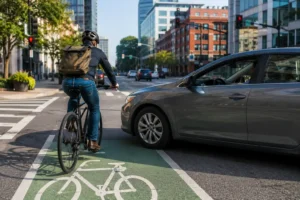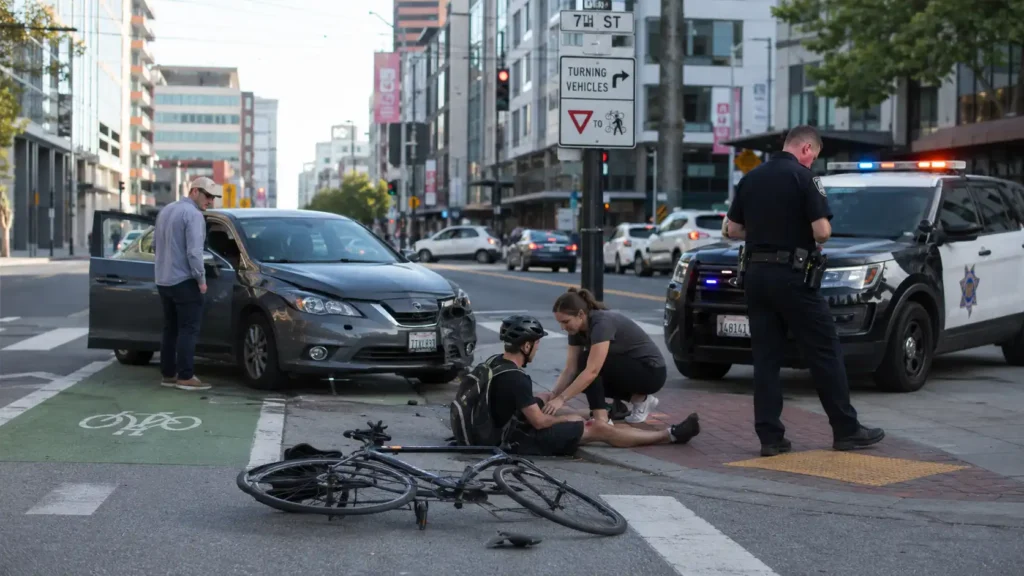
Wrong-way bicycle accidents are one of the most underestimated dangers in urban traffic environments across the United States. While cycling is widely encouraged for health, environmental, and commuting benefits, city infrastructure and traffic design are not always intuitive for cyclists, especially in dense metropolitan areas.
In many cities, one-way streets, complex intersections, shared lanes, and inconsistent bike infrastructure create confusion that can lead cyclists to unintentionally travel against traffic flow. When this happens, the risk of a serious collision increases significantly.
Unlike motor vehicles, bicycles are smaller, quieter, and less visible. When a cyclist rides in the wrong direction, drivers typically have very little time to react. These crashes often result in severe injuries or fatalities because the impact forces are compounded by unexpected closing speeds.
Understanding how and why these accidents happen is essential for both prevention and legal accountability.
How Wrong-Way Bicycle Accidents Happen in Cities
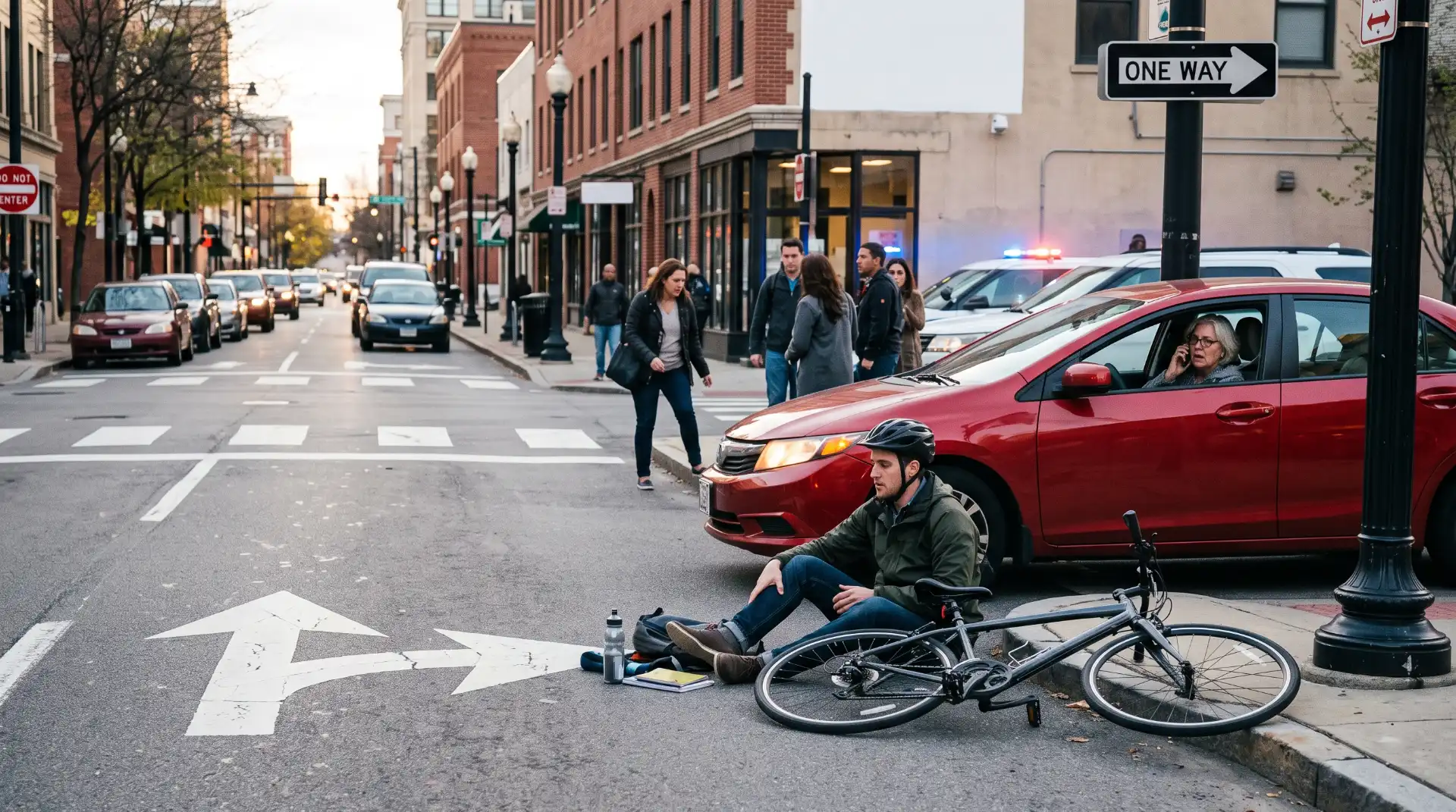
Wrong-way cycling accidents rarely occur because of a single cause. Instead, they are usually the result of multiple contributing factors that overlap in busy urban environments.
One of the most common causes is confusing roadway design. Many cities use one-way street systems to manage congestion. However, bike lanes are not always clearly marked or consistently placed on these streets. In some cases, cyclists may mistakenly enter a one-way street from a side road without noticing signage.
Another contributing factor is poor visibility of traffic signs. Signs may be obstructed by trees, parked vehicles, or commercial signage. At night, faded road markings can make it even harder for cyclists to determine the correct direction of travel.
Navigation apps also play a growing role. While GPS systems are helpful, they are not always optimized for bicycle routing. A cyclist following a digital map may unknowingly be directed onto a one-way street in the opposite direction of traffic.
In addition, some cyclists deliberately ride against traffic because they believe it improves visibility. This is a dangerous misconception. While they may feel they can see oncoming vehicles better, drivers do not expect traffic from that direction, which increases crash risk.
Why Urban Areas Increase the Risk
Urban environments present a unique set of challenges that make wrong-way bicycle accidents more likely compared to suburban or rural areas.
Cities tend to have higher traffic density, meaning more vehicles are traveling in close proximity at all times. This leaves less reaction time for both drivers and cyclists. A wrong-way cyclist can appear suddenly in a lane where drivers are already committed to movement.
Intersections are another major risk factor. Urban intersections often have multiple lanes, turn signals, pedestrian crossings, and bicycle lanes intersecting at different angles. A cyclist traveling against traffic may enter an intersection from an unexpected direction, creating confusion for drivers who are following signal patterns.
Parking activity also plays a role. In many cities, cars regularly pull in and out of curbside parking spaces. A cyclist riding the wrong way may collide with a vehicle that is pulling out without expecting oncoming bicycle traffic.
Finally, urban infrastructure is often inconsistent. Some neighborhoods have protected bike lanes, while others rely on shared lanes or no bike infrastructure at all. This inconsistency increases the likelihood of navigation errors.
Common Types of Wrong-Way Bicycle Collisions
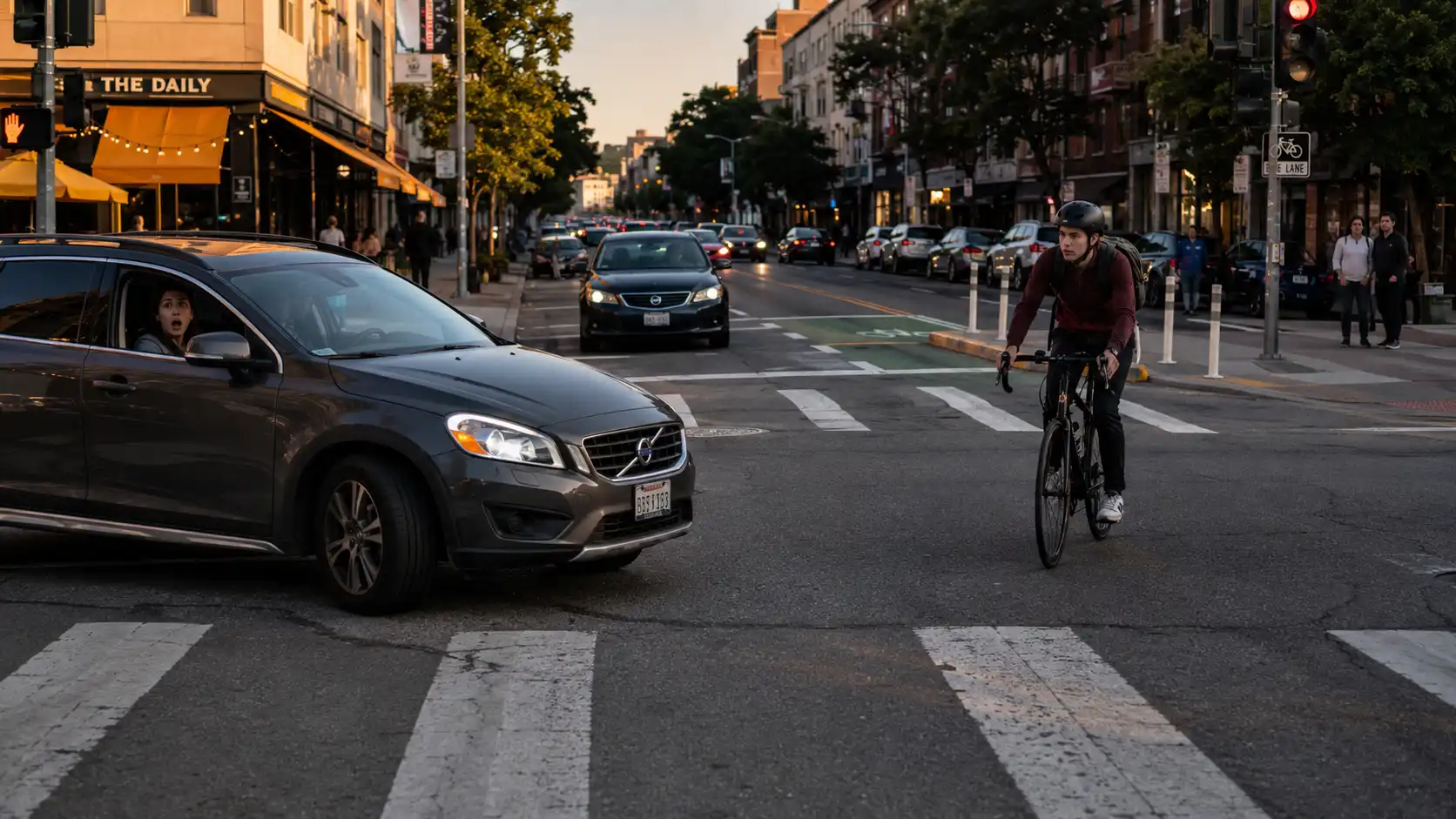
Wrong-way bicycle crashes can occur in several distinct scenarios, each with different legal and safety implications.
One common type is the head-on collision. This occurs when a cyclist riding against traffic directly collides with a motor vehicle traveling in its correct lane. These accidents are often severe because both parties are moving toward each other, increasing impact force.
Another frequent scenario is the intersection turning crash. A driver making a legal turn may not anticipate a cyclist approaching from the opposite direction in a lane where cyclists are not expected. This often results in side-impact collisions.
Dooring-related incidents can also involve wrong-way cycling. If a cyclist is traveling against traffic along parked cars, they may collide with a car door opening unexpectedly.
There are also merging lane accidents, where cyclists entering or exiting bike lanes interact unpredictably with vehicles changing lanes or merging into traffic flow.
Injuries Commonly Seen in Wrong-Way Bicycle Accidents
Because of the unexpected nature of these crashes, injuries are often severe.
Head injuries are among the most serious, especially if the cyclist is not wearing a helmet or is struck at high speed. Traumatic brain injuries can have long-term consequences, including cognitive impairment and memory loss.
Fractures are also common, particularly in the arms, wrists, collarbone, and legs. These injuries often occur when cyclists instinctively try to break their fall.
Spinal injuries may result from high-impact collisions or being thrown from the bicycle. These can lead to long-term mobility issues or chronic pain.
Soft tissue injuries, including deep bruising and ligament damage, are also frequent even in lower-speed crashes.
Liability in Wrong-Way Bicycle Accidents
Determining fault in wrong-way bicycle accidents is not always straightforward. While cycling against traffic is generally considered unsafe, liability depends heavily on the specific circumstances of the crash.
In many cases, drivers still have a legal duty to exercise reasonable care. This means that even if a cyclist is riding in the wrong direction, a driver may still be partially or fully responsible if they were speeding, distracted, or failed to react appropriately.
Comparative negligence laws in many US states allow fault to be shared between both parties. For example, a cyclist may be found partially at fault for riding against traffic, while a driver may also be at fault for failing to avoid a collision.
Municipal liability can also come into play if poor road design, missing signage, or unclear lane markings contributed to the accident.
Legal Steps After a Wrong-Way Bicycle Accident
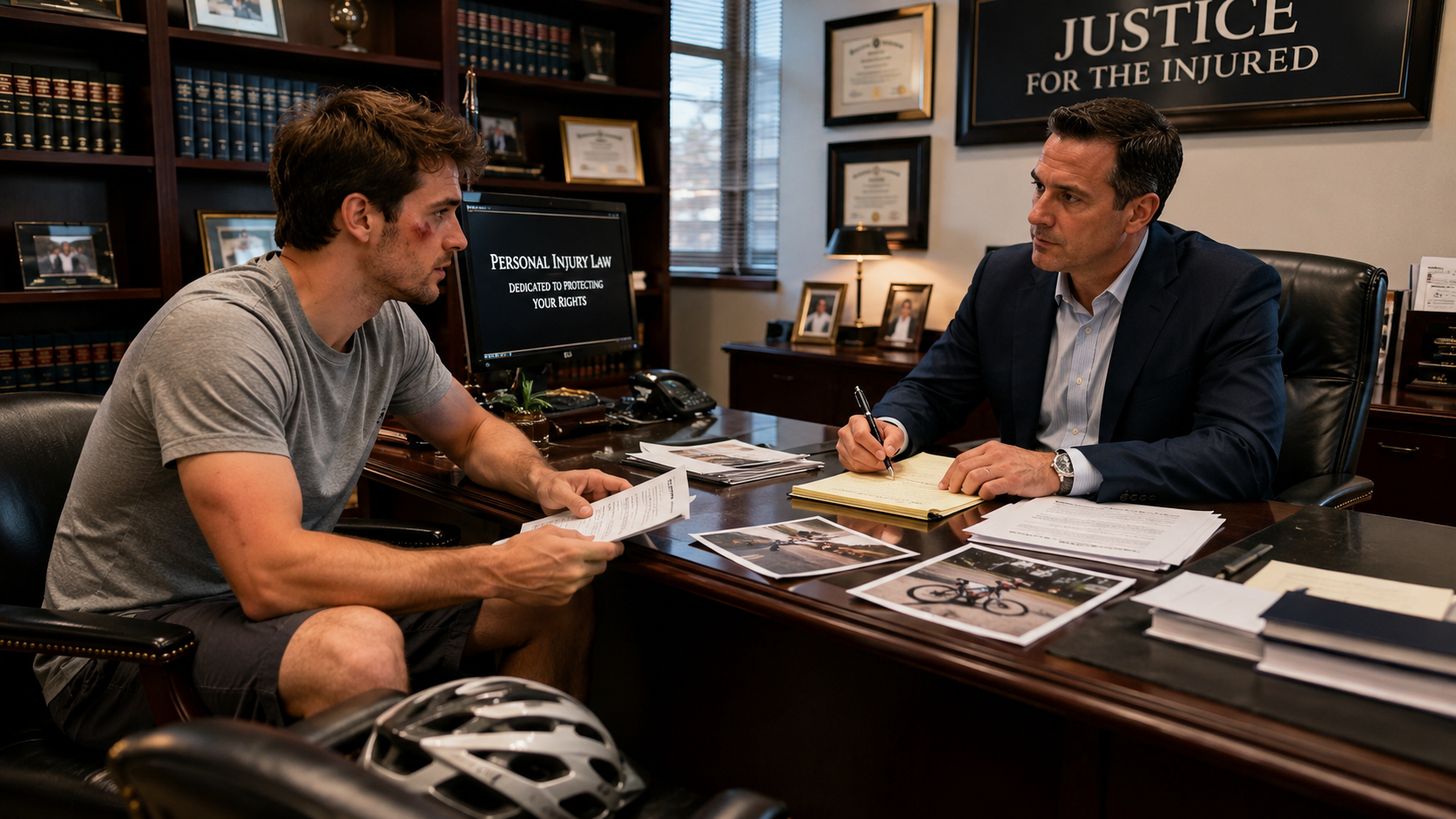
After a bicycle accident, documentation becomes critical. Evidence collected immediately after the crash can significantly affect the outcome of a legal claim.
Police reports are often the first official record of the incident. These reports may include diagrams, witness statements, and initial fault assessments.
Medical records are equally important. They establish the connection between the accident and the injuries sustained. Prompt medical attention also strengthens the credibility of a claim.
Photographs of the scene, including street markings, signage, vehicle positions, and bicycle damage, can help reconstruct how the accident occurred.
Witness statements provide additional perspectives, especially in urban environments where multiple people may have observed the crash.
For more safety data and national cycling accident trends, the National Highway Traffic Safety Administration provides authoritative information:
Prevention Strategies for Cyclists and Cities
Preventing wrong-way bicycle accidents requires both individual awareness and systemic infrastructure improvements.
Cyclists can reduce risk by always obeying directional signage, even when streets appear empty. Riding with traffic flow significantly improves visibility and predictability.
Using proper lighting and reflective gear is essential, especially at night or in low-visibility conditions. A bright front light and rear reflector can make a significant difference.
Cities can improve safety by expanding protected bike lanes, increasing signage clarity, and ensuring consistent lane markings across all neighborhoods.
Better urban planning that separates bicycle traffic from high-speed vehicle lanes can also reduce the likelihood of directional confusion.
Conclusion
Wrong-way bicycle accidents in urban areas are a serious but preventable safety issue. They often result from a combination of infrastructure confusion, visibility problems, and human error. While cyclists play a role in following traffic rules, cities and drivers also share responsibility in creating a safer environment.
As cycling continues to grow across US cities, addressing these risks through education, enforcement, and infrastructure improvements will be essential to reducing injuries and saving lives.